
San Francisco Police Department Strategy 1.0
February 8, 2018
Why was this strategy developed?
Our nation is undergoing significant political, economic, demographic, technological, and social changes. While new threats to public safety are emerging, so are new tools and techniques for responding to (and preventing) threats in a faster, more informed way. However, no police department, no matter how well-equipped, will be able to maintain safety unless it enjoys legitimacy, trust and public support. It is in the area of legitimacy and trust that many police departments have found themselves challenged in recent years. A spotlight has been directed at indicators of bias in traffic stops, arrests and use of force. And when a police officer anywhere in the country is found to have violated the public trust, social media instantly spreads the news worldwide, diminishing the legitimacy of everyone who wears a badge. All of these factors require a concerted response — from the police department itself and from the communities it serves.
Strategic planning goals and objectives
SFPD continually strives to become a more effective, inclusive and modern police department, while earning the trust and pride of those we serve and those who serve. The purpose of this strategic plan is to clearly articulate our priorities so that our members and our community understand our commitment to these important issues. It is a first step, and much of the hard work lies ahead — but with a planned approach we can set a path for continued improvement, and will hold ourselves accountable to ongoing progress against our objectives.
Our goal is to reflect on current SFPD initiatives, assess best practices across the country, and evaluate the changing environment in policing and within the City to arrive at a strategy statement that the Department and our community can embody every day. We want to ensure our priorities are transparent, initiatives are actionable and next steps are clearly defined.
Although the focus of this strategy will be on near-range concerns, the strategic planning exercise will help the SFPD build its tools and experience to launch a longer-term strategy effort shaped around the future of the Department and the City.
Introduction
Every organization has to be able to answer three questions:
- Why will people turn to us for help?
- What is our promise to them?
- What do we need to do to deliver on that promise?
The answer to these three questions is the organization’s strategy. In the summer of 2017, the San Francisco Police Department (SFPD) set out to define its strategy. The time was right — significant changes were underway in the country, in the City, and within the Department. During times of change and uncertainty, it becomes exceedingly important to reaffirm commitments, clarify priorities, and prepare for the future. This document represents the Department’s commitment to its members and to the City – a commitment to work in partnership to improve safety, while continuing to earn trust and respect.
A message from the chief
The San Francisco Police Department has a proud history of rising to challenges. At the moment, we have been challenged by the residents of the City, by the members of our Department, by the late Mayor Lee, and by the Department of Justice, to reinvent the way we do our job. We have heard you and we are taking action.
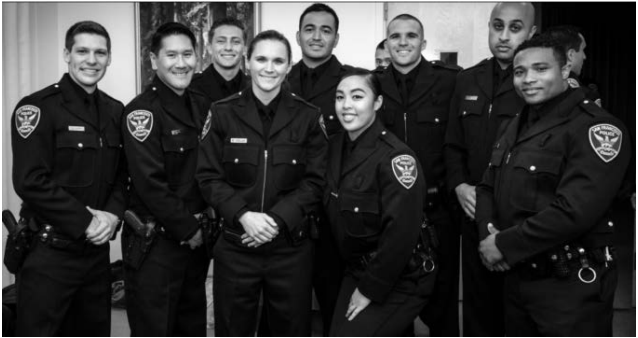
I am proud to say that the SFPD today is more responsive, inclusive and effective than before. The changes are real — you can see them for yourselves in the profiles of our new Academy graduates, in the community engagement meetings, and, critically, in the fact that the use of force in the third quarter of 2017 was down a third from the year before.
We also know that we are nowhere near done. This strategic plan represents a key next step in our journey together. It builds on our mission, vision and values, and establishes a set of priorities for the next several years. Let me be clear — the document in front of you represents a “Strategy 1.0”. While we move to implement it, we are also going to launch a far -reaching effort to envision the future of the City and of our Department within, which will be our “Strategy 2.0”. We look forward to engaging you in this effort and building a safer City for all.
- Executive summary
Over the past six months, the SFPD has worked to develop an inclusive, forward-looking strategic plan that will ensure that the Department is ready and equipped to meet the challenges of modern urban policing and earn the trust and respect of our communities.
We began by taking a lay of the land, conducting interviews and reviewing documents from a broad peer set to understand best practices of leading public sector departments across the country. These insights informed both our strategic planning process and the outputs.
We also looked in the mirror, meeting face-to-face with more than 70 members (sworn and non-sworn) of the Department through focus groups and interviews to understand aspirations and challenges. In addition, we reviewed in-process initiatives, working groups, and strategic plans across the Department to understand current strengths and efforts. In parallel, a number of sessions focused on community policing were conducted that provided additional input on what the community expects from the Department now and in the future.
The strategic planning process was governed by both internal and external stakeholders in the form of a Steering Committee (comprising the Chief of SFPD, Assistant and Deputy Chiefs and Directors), an Internal Sounding Board (comprising Commanders and representatives of Police Employee Groups) and External Senior Advisors (comprising representatives from the community and SF Mayor’s Office).
The output of our strategic process is a strategy statement and five strategic initiatives to drive the near-term priorities of the Department. These initiatives will encompass ongoing efforts, and help prioritize future initiatives.
SFPD strategy statement
SFPD stands for safety with respect for all. We will:
Engage in just, transparent, unbiased, and responsive policing
Do so in the spirit of dignity and in collaboration with the community
Maintain and build trust and respect as the guardian of constitutional and human rights.SFPD's 5 Strategic Initiative Clusters
Collaborate
Build strong partnerships with the community and City agencies for addressing community-wide challenges that impact "safety with respect"Strengthen the Department
Instill "safety with respect" into how we organize, evaluate performance, recruit, train, promote, reward, deploy and lead the SFPDImprove Responsiveness
Improve ability to respond in a timely, informed, unbiased and procedurally just way, and work towards a collaborative resolution.Define the Future
Develop a future-focused, longer-term strategic plan (Strategy 2.0) for a more modern, evolving, and inclusive SFPD with input from internal and external stakeholdersMeasure and Communicate
Align on a shared vision and transparent way of measuring "safety with respect" in order to work better with each other and our community - Background
SFPD at a Glance (2017)
SFPD By the Numbers Number Description 870,887 Population of San Francisco1 1,873 Full Duty Officers2 49 Square Miles of Land Populated 64 Square Miles of Water Patrolled ~ 16 Officers per Square Mile ~ 2 Officers per 1,000 Population Crime Statistics
867,530 calls for service
1,2023 guns seizedIn the past year, SFPD saw a
- 33% decrease in human trafficking-ex acts
- 13% decrease in total gun violence
- 11% decrease in auto theft
Over the past 10 years SFPD saw a 42% decrease in homicides
Community Engagement
- SFPD helped recruit, place, and support 391 SF youth in summer jobs run by community partners, City organizations, or non-profit organizations
- 1,554 SF youth participated in 86 Wilderness Program hiking, camping, kayaking, and sailing events organized and run by SFPD
- 2,500 turkeys delivered to the community for Thanksgiving
- 8,000 Christmas toys distributed to youth
- 30+ Coffee with a Cop events
Academy & Training
- SFPD was one of the first agencies in California to implement Procedural Justice, Police Legitimacy and Implicit Bias training to its members (both sworn and non-sworn), with half of the Department already trained in 2017
- 132 recruits graduated from the Academy
- 5,696 hours of recruit training
- 674 hours of physical fitness training
- 1,640 hours of Advanced Officer training
1 Population as of July 1, 2016 based on U.S. Census Bureau
2 Excludes the Airport (SFO) Bureau - Context of Strategic Plan
Taking a lay of the land
Conducting interviews and reviewing documents from a broad peer set to understand external best practicesLooked in the mirror
Meeting face-to-face with 70+ members of the department through focus groups and interviews to understand internal aspirations and challengesSFPD strategy statement
Creating a SFPD strategy statement that stands for "safety with respect for all"Strategic initiatives
Identify five clusters of strategic initiatives to drive the near-term priorities of the DepartmentLay of the land
We set out to understand the best practices of leading public sector departments from across the country. We reviewed a wide-ranging set of materials including, but not limited to, the listing below:
- More than 10 peer departments’ strategic plans such as Denver PD, Oakland PD, Seattle PD, and Los Angeles PD
- 21st Century Policing report
- DOJ COPS Initial Assessment
- PERF website and Guiding Principles on Use of Force
- Crime metrics, stats, and trends from departments around the country
- Police Foundation’s Executive Brief
- City publications such as the SF Department of Homelessness and Supporting Housing Plan
- Justice Sector Institutional Strengthening Project
We also conducted informational meetings and interviews with those who have undergone similar strategic planning exercises. We held meetings and interviews with the following individuals, groups, and agencies:
- Assistant Chief of the Oakland PD
- Former Chief of the Pittsburgh PD
- Chief of the Gardena PD
- Denver PD
- SF Municipal Transportation Agency
- San Jose Police Foundation
- Hetty Group
- Former Assistant Director for Intelligence at the U.S. Immigration and Customs Enforcement and the Homeland Security Investigations
- Former Chief Policy Advisory of Science and Technology at the FBI
Input from the Community
As part of this exercise, we organized a committee of External Senior Advisors (ESA) which consisted of representatives from the SF Mayor’s Office and across community groups and organizations. Additional input was obtained from the Executive Sponsor Working Group (ESWG) sessions with a group focused on community policing. ESWG sessions were held on the topics of implicit bias, hiring and diversity, and use of force. These sessions helped us better understand what the community expects from the Department now and in the future.
Through the research and discussions, the SFPD was provided an external view of best practices and community expectations that would help shape the strategy statement and initiatives.
The following “spotlights” highlight key research and findings that went into building the strategic plan.
Spotlight on: Social determinants and 21st century policing
Awareness of social issues is continuing to inform modern policing approaches. A community’s safety and crime rates are influenced heavily by factors such as population density, income disparities, and the “transitionality” of a population. While a police department cannot influence these factors directly, it has to be aware of the impact they have — and continue looking for partnerships to help address social determinants of safety — such as housing, employment, drug treatment and education.
Notably, the homelessness issue, aggravated by behavioral health issues and substance abuse, often puts police officers in a first responder role, without the necessary resources, tools or bandwidth to respond effectively. Consequently, police departments around the country are looking for partnerships to address social issues jointly, while letting police officers focus on threats to safety.
For example, the Los Angeles PD has partnered with the Los Angeles County Department of Mental Health to assist field officers in dealing with mentally ill people — and SFPD itself has developed new trainings for use of force, crisis intervention, and an award-winning training program on autism.
The “Principles of 21st Century Policing” are focused squarely on driving greater procedural justice, appropriate use of force, and proactive communications in order to keep earning legitimacy, respect and trust. In response, police departments around the country are making legitimacy and trust a cornerstone of their strategies. For example:
- Oakland PD’s mission statement: “The Oakland Police Department is committed to reducing crime and serving the community through fair, quality policing”
- Houston PD’s mission statement: “The mission of the Houston Police Department is to enhance the quality of life in the city of Houston by working cooperatively with the public and with int he framework of the U.S. Constitution...”
Image
Spotlight on: Department of Justice (DOJ) report
In October of 2016, the DOJ’s COPS (Community Oriented Policing Services) office released an assessment of the SFPD. The report was commissioned at the request of the late Mayor Ed Lee and the SFPD in response to high-profile community desire for police reform as a result of officer-involved shootings and other public events that left a void in trust between the SFPD and the community.
The DOJ’s assessment found that while the Department had proven to be committed to enhancing their partnership with the community, there were a number of concerning findings that warrant taking action. These findings included a history of bias against people of color, notably the African-American community, inadequate data and investigation into use of force incidents, and a lack of accountability structure within the Department.
An overarching finding within this assessment was that the Department lacked a strong and communicated vision for the future. Based on this, the COPS office recommended the development of a strategic plan that unites community leaders and the Department around shared goals for their communities. It was with this recommendation and the support of the DOJ that this strategic plan was developed with input from members of the broader San Francisco community and the Department.
Spotlight on: San Francisco’s efforts to improve safety
One of late Mayor Lee’s priorities was to push for a San Francisco Strategic Planning Framework that provides vision and structure for continued collaboration across all areas of local government. The key objective of this vision was to make San Francisco “a safe, vibrant and inclusive City of shared prosperity”.
Chief Scott and the SFPD have taken that vision and identified six strategic areas of focus that help inform the SFPD’s strategic initiatives.
- Public Safety: Safe Neighborhoods — ensure public safety and reduce violent crimes, property crimes, and commuter collisions
- Quality of Life: Homelessness and Behavioral Health Concerns — collaborate with service providers to address root causes of homelessness and street violence, and improve officers’ response to homelessness and those needing health services
- Trust and Accountability: Reforms — promote cultural change and police reform through DOJ recommendations and invest in long-range strategic planning with community input
- Community Engagement: Partnerships and Outreach — enhance the health and vibrancy of all our neighborhoods and engage the youth in a more coordinated effort
- Measure Performance: Focus on Outcomes — collect, store and analyze data to better serve our community and increase accountability and transparency
- Diversity: Ensure a Diverse and Inclusive Workforce — ensure the demographic makeup of members hired and promoted within the Department reflects the communities we service
Image
Look in the mirror
A key input into any strategy is a “look in the mirror” — a frank assessment of an organization’s strengths and challenges, and an articulation of its aspirations and priorities. In addition to the external sources — such as crime and use of force statistics and the DOJ report — it was critical to reflect how the Department sees itself.
To achieve this, we conducted focus groups with both sworn and non-sworn members of the Department. Overall, six focus groups were held, with over 70 participants, ranging from new cadets to 25-year (or more) veterans and with participation from employee groups such as the Police Officers’ Association and Officers for Justice. The focus groups explored concepts of what it means for SFPD to be successful, what it means to be a good police officer, limitations to achieving these goals, and how shifting trends in public expectations of police officers may change the future of the Department. We also held interviews with key Department owners of DOJ Executive Sponsor working groups. To ensure that all members had the opportunity to voice their opinions, an email address was set up to allow for additional feedback to be submitted.
Additionally, we supplemented the discussions with a review of several in-progress initiatives and key documents to better understand the Department’s aspirations, challenges and goals. Below are a few examples of what was reviewed:
- Progress summary of DOJ-related initiatives
- Published responses to the DOJ/COPS recommendations on the Department website
- IT gap analysis and technology 5-year plan
- Meeting minutes and presentation materials for Use of Force working groups
The focus group discussions were candid and emotionally charged. The feeling that came across the strongest was the sense of pride that SFPD members take in protecting and serving their community. The members take pride in responding quickly when needed and receiving very few complaints. Many also remarked with pride on the Department’s history of engaging with, and representing a diverse community. In the communities they serve, members have seen indicators of better engagement and interest from the youth. Finally, the members take pride in each other, as they build strong bonds, develop skills and keep each other safe.
However, along with pride, some Department members voiced a degree of frustration. Many feel that every day they are asked to do more, are subject to more scrutiny, and face more challenges. One of the key challenges is the portrayal and perception of SFPD in the media, with City officials and community leaders. Another major challenge for the members is that so many of the calls stem from the homeless crisis in the City — an issue that the members are not well-equipped to address without support from City and community groups. There was also a request for better technology / resources needed for officers to conduct their jobs more efficiently and safely.
Finally, despite the challenges and the frustration, the members expressed the determination to serve and grow as the Department and as individuals — through training, technology, community engagement, better communications and higher awareness of self and others. Every police department, including our own, is a learning institution and we owe it to our members and the community to be ever aware of the need to be attune to police culture and our relationship with the community we serve. The members are excited for the difficult but rewarding journey the new strategic plan will provide and look forward to better serving the community.
Laying out the strategy
From the “lay of the land” research and discussions, a few key takeaways were identified including the need to earn trust through procedural justice, transparent communications and a “guardian” mindset. There was also an opportunity to continue collaborating with other departments and the community to address public safety needs.
From the “look in the mirror” it was identified that more training, development, resources including new equipment / technology, and partnerships are needed for a more effective Department.
Thus, armed with the knowledge of national and regional changes, informed by the voices of the Department, challenged by the stakeholders, and inspired by best practices, we set to formulating the strategy and the supporting initiatives. The strategy statement and the initiatives described in the next section went through a number of iterations to ensure that they embodied the aspirations, priorities and commitments of the stakeholders. Each initiative was designed to build on the existing efforts of the Department and improve “safety with respect” while addressing bias.
- Statement of Strategy
SFPD’s strategy statement was developed holistically, combining insights from external research, as well as, our internal review of Department efforts, aspirations and challenges. The inputs are described in detail above, but included the following:
- Member challenges and aspirations
- In-progress transformation efforts
- Current mission/vision/values of the SFPD and San Francisco
- Trends and good practices inputs from community leaders
- 21st Century Policing
- Department of Justice recommendations
The strategy statement was designed as a synthesis of our priorities and aspirations in simple, easy to understand language that was concise enough to fit on the back of a business card, but targeted enough to inform processes, policies and behaviors. It was also important that the statement spoke both to members of the SFPD and to the City, and reflected ongoing SFPD evolution in line with 21st Century Policing and the recent focus on addressing bias
SFPD’s strategy statement
SFPD stands for safety with respect for all. We will:
- Engage in just, transparent, unbiased, and responsive policing
- Do so in the spirit of dignity and in collaboration with the community
- Maintain and build trust and respect as the guardian of constitutional and human rights.
Safety: Residents, visitors and members are safer and feel safer
Respect: Engage with residents, visitors and each other in the spirit of mutual respect and dignity - and earn respect and trust
Engage in just: Guided by principles of fairness and procedural justice in ensuring everyone's safety
Transparent, unbiased: Measure, monitor and train to uphold our commitment to policing without bias, and address any issues in an open and collaborative manner
Responsive: React quickly to safety risks
Collaboration: Actively partner with city agencies and community to jointly address our most pressing challenges
Guardian: Shift from "warrior" to "guardian" mindset
- Strategic Initiatives
To deliver on the promise of the strategy, five high - level initiative clusters were identified — encompassing much of the Department’s ongoing work, as well as, directing the development and prioritization of future initiatives.
The five strategic initiatives are:
- Collaborate: Build strong partnerships with the community and City agencies for addressing community -wide challenges that impact “safety with respect”
- Improve Responsiveness: Improve ability to respond in a timely, informed, unbiased and procedurally just way, and work towards a collaborative resolution
- Measure and Communicate: Align on a shared vision and transparent way of measuring “safety with respect” in order to work better with each other and our community
- Strengthen the Department: Instill “safety with respect” into how we organize, evaluate performance, recruit, train, promote, reward, deploy and lead the SFPD
- Define the Future: Develop a future -focused, longer -term strategic plan (Strategy 2.0) for a more modern, evolving, and inclusive SFPD with input from internal and external stakeholders
In the spirit of 21st Century Policing, the initiatives will support SFPD’s efforts to address bias and increase trust in the City. In addition, the initiatives can be measured against their success at supporting the core components of “safety with respect”:
- Effectiveness: Improve safety and perception of safety, and reduce crime
- Engagement: Create, improve and maintain dialogue between members, residents and visitors
- Empowerment: Develop and support the right set of skills, behaviors and culture
- Efficiency: Deploy people and resources for maximum impact and stewardship
Each of these initiatives will be driven by an internal champion, and results will be shared with the Department and the public on a regular basis to ensure accountability and progress against our priorities.
- Looking AheadImage
The strategy outlined in this document will guide the Department over the next several years. It will become embedded in the way the Department recruits, rewards, operates and communicates. However, more fundamental changes are underway in our City, requiring a more forward-looking, longitudinal plan. This long-range plan would take into considerations socioeconomic, demographic, technological, and other changes emerging in San Francisco — and reflect similar long-range plans of other City Departments.
The long-range plan (think of it as Strategy 2.0) will be built on a more nuanced understanding of the needs and issues of diverse San Francisco communities and Department members. We look forward to co-creating it with you, while keeping you informed on our progress. Together, we can transform the San Francisco Police Department and create a safer City for all!
Contact the SFPD
Community Relations unit
415-837-7245
[email protected]Meida Relations Unit
415-837-7395
[email protected]Connect with the SFPD
San Francisco Police Department
Facebook.com/SFPDSan Francisco Police(@SFPD)
Twitter.com/SFPD - Governance Bodies
SFPD strategic planning steering committee
- William Scott, Chief of Police, SFPD
- Mikail Ali, Deputy Chief, Special Operations Bureau, SFPD
- Toney Chaplin, Assistant Chief – Operations, SFPD
- Michael Connolly, Deputy Chief, Professional Standards and Principled Policing Bureau, SFPD
- Catherine McGuire, Director, Fiscal Division, SFPD
- Susan Merritt, Director, Technology Division, SFPD
- Robert Moser, Deputy Chief, Administration Bureau, SFPD
- Michael Redmond, Deputy Chief, Field Operations Bureau, SFPD
- Hector Sainez, Assistant Chief – Chief of Staff, SFPD
- John Sanchez, Director, Forensic Services, SFPD
- Denise Schmitt, Deputy Chief, Airport Bureau, SFPD
- David Stevenson, Director, Strategic Communications, SFPD
Internal sounding board
- Theresa Ewins, Commander, Municipal Transportation, SFPD
- Marty Halloran, President / Insp. SFPOA
- David Lazar, Commander, Community Engagement Division, SFPD
- Ann Mannix, Commander, Golden Gate Division, SFPD
- Manny Marquez, President, NLPOA
- Greg McEachern, Commander, Investigations Bureau, SFPD
- Robert O’Sullivan, Commander, Administration Bureau, SFPD
- Daniel Perea, Commander, Metro Division, SFPD
- Peter Walsh, Commander, Special Assistant to Chief of Staff, SFPD
- Yulanda Williams, President / Lieutenant, OFJ
- Gregory Yee, Commander, Airport Bureau, SFPD
- Paul Yep, Captain, Field Operations Bureau,
External senior advisors
- Igor Belokrinitsky, Principal, PwC
- Sandy Boyd, Ed.D, Core Faculty POST Command College
- Amos Brown, President, SF NAACP, 3rd St Baptist
- Joelle Kenealey, CPAB Chair (Ingleside)
- Jay Nath, Chief Innovation Officer, Mayor’s Office of Civic Innovation
- Michael Pappas, SF Interfaith Council
- Mattie Scott, Bayview Homicide Advocates
- Julie Traun, Director of Court Programs, Bar Association of San Francisco
- Sources: Select Bibliography
External resources
- 21st Century Policing report
- DOJ COPS Initial Assessment:
- PERF website and Guiding Principles on Use of Force
- SF city crime metrics
- International Association of Chiefs of Police (IACP) website and Research on Improving Police Efforts to Control Crime
- IACP 2017 Conference and Chief De Lucca President’s Message
- Harvard Business School (HBS) case study Conceptual Foundations of the Balanced Scorecard
- Police Foundation website and Executive Brief
- SF’s Dept. of Homelessness and Supportive Housing Plan
- SF’s Office of the Mayor website and Police Reforms
Strategic plans
- Denver Strategic Plan
- Los Angeles Strategic Plan
- Oakland Strategic Plan
- Seattle Strategic Plan
- Chicago Strategic Plan
- New York Strategic Plan
- Baltimore Strategic Plan
Interviews
- Jim Chapparo, PwC Federal Homeland Security and Law Enforcement team
- Florence Chung, CEO of The Hetty Group
- Paul Figueroa, Assistant Chief, Oakland Police Department
- Ron Fisher, PwC Global Technology Deals Leader, Chair of SJ Police Foundation
- Anne Fritzler, Strategic Planning & Policy, SF Municipal Transport Agency
- Rahul Gupta, PwC Head of Homeland Security and Intelligence and SMART Infrastructure
- Cameron McLay, Senior Advisor at PwC, Safer Cities Initiative, Former Pittsburgh Chief of Police
- Ed Medrano, Chief, Gardena Police Department
- Sasha O’Connell, PwC Federal Homeland Security and Law Enforcement team
- Shelly Turner, PwC Department of Justice team
- Chris Wyckoff, Data Analysis Unit Director, Denver Police Department
- 21st Century Policing report
- Acknowledgement
This document was developed through San Francisco's Civic Bridge, a program led by the San Francisco Mayor's Office of Civic Innovation where pro-bono teams from the private sector work collaboratively with San Francisco City & County Departments on high-priority projects over a four-month engagement. The pro-bono teams bring unique skills, expertise, and perspective – and their generous gift of time and energy – to support City programs. The partners produce concrete deliverables to advance City staff program goals, with a focus on workable and enduring ways to make the City more livable, affordable and globally competitive. The SFPD would like to recognize and thank PricewaterhouseCoopers (PwC) for partnering with the City on this project.
We would like to specifically thank the following people for volunteering their time and experience to support this effort: Igor Belokrinitsky, Kristin Centanni, Kristin Craig, Sierra Hawthorne, Elaine Liu, Keith Lucken, Ken Lund, Kendall McCarthy, Cameron McLay, Richa Mohan, Helen Petersen, Mukund Srirangapatnam, and Martin Wan.