
Bias-Free Policing Strategic Plan
Report of the Executive Sponsor Working Group on Bias
Acknowledgements
Because bias exists throughout society, minimizing bias in policing cannot be accomplished without the input of a wide range of community members and stakeholders. Beginning in 2017, the San Francisco Police Department formed the Executive Sponsor Working Group on Bias with the intent of engaging with the community on ways to minimize bias within the Department. The group, while open to the public, featured a diverse list of members and frequent attendees. This truly collaborative effort, centered on a common goal of minimizing bias in policing, made space for a wide range of perspectives and the group’s success is a testament to the strength of diversity. Prior to turning their attention to this Strategic Plan, the group revised three Department General Orders and strengthened the ability of the Department to recognize bias within its ranks and to respond to the constructive criticism of outside organizations. Particular recognition is due to members of the subgroups formed to complete this report, including:
Community Perceptions of Police
- Angela Jenkins, Community Member
- Dolores Piper, Community Member
- Megan Rohrer, Chaplain, San Francisco Police Department
- Rebecca Young, Deputy Public Defender, City and County of San Francisco
- Rome Jones, President, San Francisco Youth Commission
Police Perceptions of the Community
- Damali Taylor, Vice President, San Francisco Police Commission
- Maxine Anderson, League of Women Voters
- Teresa Ewins, Commander, San Francisco Police Department
- Brian Cox, Deputy Public Defender, City and County of San Francisco
- Rachael Kilshaw, Staff, San Francisco Police Commission
Bias by Proxy
- Ashley Raveche, League of Women Voters
- Julie Traun, San Francisco Bar Association
- Phillip Lohaus, Staff, San Francisco Police Commission
The Department and the Executive Sponsor Working Group extend particular thanks to Professor James Lance Taylor, PhD, faculty member at the University of San Francisco and SFPD consultant, who provided external review of the Bias-Free Policing Strategic Plan. Professor Taylor’s expertise in African American political history, social movements, and law and public policy yielded important insights that helped improve and refine the final version of this document.
We would also like to thank the California Department of Justice and Jensen Hughes (Hillard Heintze) for their ongoing evaluation and support for the Department’s anti-bias initiatives.
Introduction
Bias has no place in modern policing. Although bias is an unavoidable feature of the human experience, as guardians of public safety, it is particularly incumbent upon law enforcement professionals to recognize and eliminate their own biases. A number of events in recent years, including the death of George Floyd and the national reckoning on race that it prompted, have highlighted the need for police departments to root out bias across all aspects of their work and have given voice to those long displeased with law enforcement. In the words of San Francisco’s Chief of Police, William Scott, “The whole world is speaking to us and we need to hear what’s being said, we have to change the way we do policing in this country.” While understanding that inequities exist at every level of the justice system—both in California and nationally—the San Francisco Police Department (SFPD) recognizes these inequities are unacceptable, and strives to eliminate bias in all of its forms: systemic, institutional, and individual.
SFPD is committed to equity as a core tenet of its values, culture, and institutional practices. As the third oldest police department in the United States, SFPD has created a more diverse and inclusive police department. In 1948, SFPD hired its first Black police officer; in 1957, SFPD appointed its first Chinese American; in 1975, SFPD hired its first female law enforcement officer; in 1977, SFPD began actively recruiting officers from the LGBTQ community, and in 1979 became the first law enforcement agency to hire openly LGBTQ officers. Yet progress was not always easy or rapid. In the 1970s, SFPD confronted the slow progress of equal access to jobs and promotions for minorities and entered into a consent decree agreement with the US Department of Justice that lasted nearly twenty years. While efforts to shape the SFPD workforce to better reflect the diversity of San Francisco continued into the 2000s, the Department also confronted a number of incidents that highlighted a need to examine not only how it treated its employees, but also how it policed the community. In 2010, a series of racist, sexist, and homophobic texts shared among a group of SFPD officers was discovered; a similar discovery was made as part of an investigation into an alleged sexual assault in 2015. These incidents signaled the need for cultural change in the Department, leading to an outside assessment of policing practices at SFPD from the city’s Blue Ribbon Panel on Transparency, Accountability, and Fairness in Law Enforcement. The Department also sought additional clarity and guidance in 2016 by volunteering to engage with the US Department of Justice Office of Community-Oriented Policing Services (DOJ-COPS) to conduct a thorough assessment of its policies and practices. Meanwhile, DOJ-COPS developed an implementation guide for Departments to modernize their approach to policing and to incorporate community policing principles into the course of their daily work. This report from the President’s Task Force on 21st Century Policing greatly influenced the Department’s approach to implementing specific DOJ-COPS-identified reforms and has become required reading at SFPD.
In its initial report, DOJ-COPS identified a number of areas for improvement with respect to biased policing, and the SFPD subsequently established an Executive Sponsor Working Group to develop recommendations and solutions to minimize bias. The group found that bias could not be eliminated without a candid examination of how police view the communities they serve, how those communities view the police, how bias manifests in interactions among officers, and how it manifests in interactions among individual community members. By policing with respect, dignity, fairness, and without bias, the department also has the opportunity to set a positive example for San Francisco and beyond.
Since the US DOJ-COPS report, the San Francisco Police Department has instituted a number of reforms aimed at decreasing the prevalence of bias within the force. Most significantly, and in line with DOJ-COPS recommendation 25.3, we instituted policies that prohibit explicit bias,1 which includes a system of monitoring employee communications coupled with a clear consequence—termination—when allegations of this misconduct are sustained. Our officers are aware that any instance of explicit bias is unacceptable, but our work to eliminate bias cannot end there. As the allegations of a former bias trainer of the existence of “pervasive anti-blackness” within the SFPD indicate, much work remains to ensure that Department members retain the ability to identify and confront their biases in a manner that will lead to increased understanding and improved outcomes. Because bias is an innate feature of humanity, we must continue to devise strategies that make officers aware of their own implicit biases and equip them with tools and methods to eliminate them. Training alone does not change behavior and unconscious biases. SFPD is responsible for filtering out prejudice, racism and class biases at every stage of an officer’s career—from hiring and interviews to promotions through the ranks into increasing levels of seniority. We must also continue to expand and increase the collection and analysis of data to impact training, policy and procedures.2
This strategic plan provides a transparent roadmap for the department to address implicit bias and explicit biases that are difficult to detect. It reflects the collective input of the Executive Sponsor Working Group on Bias, who used the findings of DOJ-COPS report as a foundation. While working group members represented a diverse spectrum of constituencies and interests, it sought to mitigate and control for its own biases by researching emerging national best practices, conducting interviews, and devising public surveys. The purpose of the plan is to clearly articulate SFPD’s commitment to eliminating bias across all aspects of its work. As the plan demonstrates, much of the hard work to eliminate bias within the department lies ahead. By transparently outlining the steps that the department must take to address this important issue, we will empower the people and government of San Francisco to hold the police department accountable, enable continuous improvement within the Department, and facilitate the creation of a law enforcement agency and city that are at the leading edge of bias-free policing.
To achieve this vision, we first sought to examine the dimensions of bias that bear upon SFPD’s work. We developed subgroups to investigate how police perceive the communities they serve, how those communities view the police, how bias affects relationships and personnel decisions within the department, and how biases in larger society affect the mobilization of police resources through a process known as bias by proxy. Examining the four dimensions facilitated a far-reaching, substantive engagement with psychological, political, legal, historical, penal, labor-related, and leadership issues pertinent to bias as identified in the 2016 DOJ-COPS findings and recommendations.
Mission Statement and Goals
In establishing our mission statement, the San Francisco Police Department and the Executive Sponsor Working Group on Bias recognize that inequities exist at every level of the criminal justice system, both in California and nationally. A guiding principle of the San Francisco Police Department is its commitment to treating all people with dignity, fairness and respect. It is crucial for members to carry out their duties in a manner free from bias and to eliminate any perception of policing that appears biased. The SFPD further recognizes that the communities it represents deserve procedural justice in all of their interactions with the department. In addition to eliminating inequities and bias, procedural justice will also facilitate the role of the police department in keeping all San Franciscans safe, as respected processes enhance institutional credibility and effectiveness. With respect to bias:
The SFPD is committed to developing an on-going institutional vision that addresses bias as part of an overall strategic plan; one that is transparent and gives voice to the community, including the early identification of and intervention in behaviors that are indicative of bias and on-going implicit bias training for its members. SFPD is committed to professional policing; professional policing is the opposite of biased policing.
To accomplish this vision, we must achieve the following goals, while incorporating community feedback at each step:
- Define how bias manifests across all dimensions of our work;
- Evaluate national best practices and opportunities for policy innovation to establish a set of tools for preventing and eliminating bias, and create nation-leading policies and procedures to address bias where no national best practice currently exists;
- Develop an actionable implementation plan to root out bias across each dimension;
- Leverage existing metrics, qualitative measures, and auditing mechanisms to evaluate the effectiveness of our implementation plan and establish new ones if needed.
SFPD continually strives to become a more effective, inclusive and modern police department, while earning the trust and pride of those we serve and those who serve. The purpose of this strategic plan is to clearly articulate that bias of any kind has no place in the SFPD so our members and our community understand our commitment to these important issues. It is a first step, and much of the hard work lies ahead. But with a thoughtfully considered road map, we can set a path for continued improvement and will hold ourselves accountable to ongoing progress toward the attainment of our objectives.
Section I: Dimensions of Bias
- Police Perceptions of Community
Police perceptions of the community include the attitudes, beliefs, presumptions, and biases police have of the community or segments of the community. These perceptions are influenced by each officer’s family upbringing, education, observations and interactions with community members, their lived experience, their training, and the way a community is depicted in local and national media coverage. Biases emerge from the human tendency and need to classify individuals into categories as we strive to process information and make sense of the world.3 The mental maps humans create become reference points to help navigate new encounters and to categorize people by innate characteristics.4
While biases may serve as a guide for humans, in the context of policing, they directly bear upon officers’ interactions with the community. Whereas each officer’s own life experiences foster empathy and understanding, they can also fuel biases. Perceptions of criminality 5 for example, whether influenced by socio-economic indicators or racial ones, may affect an officer’s enforcement decisions at the incident level. 6 Directly addressing bias at the individual level would require candid admission of its existence, an act that may be interpreted as bias itself. The theory goes like this: “You don’t talk about discrimination and bias, because then … people might think cops are discriminatory, they’re biased. If [officers] admit that, then what does it mean about how [officers] serve the public.”7
At a national level, officers may be reluctant to candidly discuss their perceptions of specific communities, but they readily discuss what they believe the community thinks of them. A 2016 Pew Research Center national survey8 of nearly 8,000 law enforcement officers from 54 police and sheriff’s departments across the United States examined, in part, what officers believed about the communities they serve:
- A majority of officers retain a generally positive view of the public.
- Nearly 30% believe that officers have a reason to be distrustful of most citizens.
- About 90% of officers say that they have an excellent or good relationship with White in their communities, and 56% rate the relationship between Blacks and officers positively. Less than one-in-three Black officers view the relationship between the Black community and police positively.
- 35% of all officers surveyed—but only 27% of White officers—believe that protests over the deaths of Black people during encounters with law enforcement were motivated by a genuine desire to hold police accountable. By contrast, 69% of Black officers believe this to be true.
- 92% of all officers surveyed believed that protests were motivated at least in some part by long- standing bias against the police.
- 67% of officers believe fatal police shootings of Blacks are isolated incidents. 60% of the public disagree and see the issue as systemic or more pervasive. 57% of Black officers agree with the public.
- 92% of White officers stated that the country has made the changes needed to give Blacks equal rights with White. Just 6% believe that our country needs to continue making changes to give Blacks equal rights with Whites.
This survey makes clear the difficulty of generalizing police perceptions of communities. National surveys also paint broad stroke over what are highly localized circumstances, and do not measure whether an officer may act on their attitudes. They do, however, usefully indicate that many officers perceive bias against them from the populations they serve. Biases, whether conscious or unconscious, occur at both systemic and individual levels and are a function of lived experience and circumstances unique to each community and department. Mitigating biases may best be accomplished by recruiting from a wide variety of backgrounds, ongoing training, and continual education on relevant laws, as officers are likely to view the exercise of justice through the lens of their own lived and professional experiences.
SFPD PERCEPTIONS OF THE COMMUNITIES THEY SERVE
Identifying how SFPD officers perceive the community will be challenging and should be based on more than the racist scandals that have rocked the department in recent years.9 As an organization charged with keeping San Francisco safe, SFPD plays a crucial role in helping to ensure that biases— though present and imbedded in every human, including SFPD officers—based on perceptions of the community do not undermine the legitimate work of police officers. Aside from ongoing implicit bias training, few opportunities exist for officers to provide unguarded, candid statements about the communities they serve. The taboo around discussions of race and bias—within the department and in society—impede a comprehensive analysis of officer perceptions of the community.Moving forward, the department should continue to work with outside experts on confidential surveys to gain a better understanding of how officer perceptions shape their interactions with specific communities. Recruiting a police force that is demographically reflective of the communities that it serves will further enhance officer understanding of particular communities while simultaneously deepening ties with those circles, as would training sessions to help officers better connect with diverse communities during public and private forums on the topic of bias. As discussed in the next section, increasing understanding between the community and the department fosters a positive feedback loop, whereas a lack of communication between the two has the opposite effect.
- Community Perceptions of Police
There are many intersectional communities in San Francisco, with varying opinions about the San Francisco Police Department, about policing in general and about punitive (in)justice.10 We will provide information about the general population, a few demographic neighborhood and station patterns that are particularly affected by policing and an outline of actions that potentially change community perceptions about policing. Community perceptions of police officers vary based on media coverage, use of force, personal experiences with crime and policing, race-ethnicity, socio-economic class, age, nativity and legal contexts (like sentencing priorities and incarceration lengths).11
The view that police take of themselves often differs from the way they are perceived by the public, and this extends to perceptions of the role that police play in society. In the same Pew study cited above, officers were much more likely to view themselves as protectors than the public, and the public was much more likely to view police as enforcers than police officers do. The term ‘protector’ has a positive, if paternalistic, connotation; the term ‘enforcer,’ in contrast, has a punitive one.12 Perspectives on the protests over police treatment of African American individuals that arose from the 2016 Pew national survey similarly differ between officers and the public, with the public much more willing to characterize the motivation of protesters as a “genuine desire for accountability” than officers.
Whereas the Pew survey defined perceptive differences in terms of “protectors,” law enforcement communities have internally grappled with transitioning from a self-perception of ‘warriors’ to one of ‘guardians.’ ESWG members noted that the concept of guardianship extended to protection of all members of society, including those who may have committed crimes. These differences in perception highlight the work that remains to bridge the gap of understanding of the role that law enforcement plays in communities. The difference in perceptions between officers and the communities they serve is a key challenge facing law enforcement nationally, but the nature of these differences becomes more nuanced when one examines specific communities.
SAN FRANCISCANS’ VIEWS OF THE SFPD
San Francisco’s 2019 biannual survey of residents shows that safety and law enforcement was an issue for 21% of respondents, with 45% of respondents stating that public safety has gotten worse in the past two years.13 While “low-income respondents rate government more positively than higher income ones,”14 with the exception of Black/African American residents, high income residents tend to feel safer than low income residents.15 Although most respondents (85%) feel safe walking alone during the day,16 Hispanic/Latinx women feel the least safe (72%). Although the survey did not directly ask participants of their opinion of SFPD, 6% of respondents felt that “incidents” such as “bike theft or car break-ins…were not adequately addressed by the police.”Community Assessment of the SFPD:
Image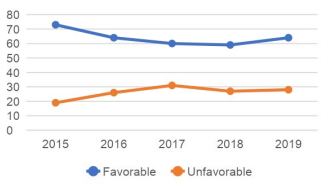
Figure 1: Data from the San Francisco Chamber of Commerce CityBeat Polling17 It is important to separate community impressions of public safety generally from that of the police department specifically. Some activities, such as open drug dealing and increases in petty crime, for example, may have more to do with policy choices outside the control of the Department than with the job performance of individual officers. Nevertheless, opinions of SFPD differ significantly among different communities within the city. San Francisco is a city known for its diversity; likewise, individuals have “a spectrum of encounters”18 and experience with the SFPD. Individual officers have positive relationships throughout San Francisco’s diverse communities.
At an aggregate level, favorability ratings of the SFPD appear to have improved in recent years: San Francisco Chamber of Commerce’s 2019 City Beat Poll revealed that nearly two-thirds of San Franciscans rate the SFPD favorably. After a four-year decline, in 2019 the SFPD’s favorability rose to 2016 levels. This is a promising sign, but to draw actionable conclusions, a more detailed survey that breaks down support by respective districts and neighborhoods would be needed.
A 2016 Police Commission survey provides clues as to what might increase favorability ratings further.19 When asked what a new police chief should focus on, the community identified the following as top priorities: improving police training; connecting with members/department; reviewing effectiveness of all programs; assessing internal accountability model; and forming partnership with community groups. The survey indicated that community wanted the SFPD to focus on responding to emergency calls for service; crime prevention & reduction; police accountability; promoting police-community partnerships; and maintaining public order and use of force training.
Police accountability and partnerships each relate to the central question of credibility; restoring or improving credibility will require different strategies in different communities. The question of how a “community” is defined will further bear upon the success of strategies to improve the relationship between the police and the people that they serve.20 If a community is defined by race, for example, SFPD may choose to focus on increasing diversity and conducting listening sessions with specific demographic slices of the population. If, alternatively, a community is defined by income, programs aimed at less privileged neighborhoods—irrespective of their ethnic breakdown—may prove more successful. Although there will be overlap between these groups, viewing the problem as one of race neglects the intersecting challenges that exist within each ethnic community. Data in San Francisco and other cities in the US show that small segments within the community would like law enforcement officers to “turn a blind eye” to some crimes like littering, jaywalking or simple possession of drugs, “but the vast majority of community members are in favor of law enforcement doing their jobs.”21 Notably, individuals with Post Traumatic Stress Disorder (PTSD), anxiety and/or depression have heightened fears about crime, but they are also more likely to have negative perceptions of police and the legal system.22 The largest source of data about San Franciscans community needs and priorities for policing come from calls for service: “while incident level factors (e.g., suspect's race), neighborhood context (e.g., socioeconomic disadvantage) and agency policy may inform enforcement rates through their effects on officer behavior, calls for service may inform enforcement rates first by bringing incidents to officers’ attention and by signaling community residents’ preferences about enforcement.”23 Additional listening opportunities are needed to capture the communal concerns of groups who are less likely to report crime to the police. For example, transgender and gender-nonconforming are less likely to report positive experiences with the police than cisgender individuals, but they are also less likely to interact with. the police.24 Additionally, despite data showing that calls for service is a more reliable predictor of enforcement than race,25 law enforcement must respond to the perception of African Americans that violent policing in high crimes neighborhoods causes community fragmentation and decreases public health26 and public confidence.
None of this is to say that police in general, including SFPD, do not have significant work to do in overcoming a lack of credibility with specific racial groups. SFPD continues to stop African American drivers at a disproportionate rate, a problem that transcends socio-economics. Members of our Executive Sponsor Working Group noted ongoing questions surrounding the legitimacy27 of policing since many view law enforcement entities as vestiges of America’s dependence on enslaving people of African descent.28 As noted above, however, African American households are no less likely to desire a safe environment than other types of households. Transcending ongoing critiques of law enforcement legitimacy is beyond the capabilities of the SFPD alone but maintaining awareness of three prevailing views of law enforcement’s role in society may prepare officers to better understand the perspectives of different communities they may encounter on the job. These three schools of thought, as identified by the Executive Sponsor Working Group, include:
- Law and Order – Strict Adherence to Crime and Punishment
- Criminal Justice Reform – Supports policing with social justice control
- Abolition of Policing and Prisons – Strict belief in alternatives to policing and prison institutions
Samples of these categories are seen in these local organizations:
- Smart on Crime: Law and Order practitioners
- Campaign Zero: Criminal Justice Reform
- Defund SFPD Now: Abolition of Policing and Prison
By viewing peoples’ perspectives of police through these focal points, officers can readily determine the best approach to engage the public they serve. Intentional efforts to demonstrate “police trustworthiness and fairness may improve cooperation with the police, independent of socio-demographic factors and neighborhood crime levels.”29 Studies suggest that the following can help improve community perceptions of police:
- When community members view body worn camera footage, they perceive officers more favorably than when they view other types of camera footage.30
- Studies in the US and UK suggest that community members who begin with a negative perception of law enforcement are more swayed by information, metrics and data than those who initially had favorable perceptions.31
- Positive contacts and community policing efforts with youth, particularly young males,32 improve their perceptions of the justice system.33
- Partnerships between law enforcement and faith leaders to provide mediation, education and community safety information.34
- Bias Within the Workforce
The national discourse surrounding bias and policing has mostly focused on how bias manifests in interactions with the public. Law enforcement agencies across the nation, however, have also faced challenges in recruiting, hiring, and retaining a diverse corps of officers. Studies have shown that a diverse and inclusive police workforce has considerable advantages—it increases openness to reform, helps facilitate community relationships, and may help reduce instances of officer misconduct.35 One recent study, for example, found that rates of fatal shootings by officers “are almost 50 percent higher in cities with police forces led by white police chiefs than in cities with black police chiefs.”36 Conversely, a less-diverse workforce may be less open to reforms, less aware of institutional blind spots, and less willing to accept officers who, while not fitting the traditional model of a police officer, may nonetheless have critical skills to bring to the profession.
For the purposes of this strategic plan, bias within the workplace occurs when a current or prospective employee or a group of employees is treated less favorably than another employee or group in the workplace. Bias within the workforce also occurs when such employees or groups of employees are subject to negative, hostile, or discriminatory treatment because of characteristics such as race, color, ethnicity, national origin, age, religion, gender identity or expression, sexual orientation, mental, physical disability or other perceived characteristics. Bias in the workplace includes, but is not limited to, an employee or group of employees are unfairly excluded from activities, experiences, opportunities, or information for which they are either qualified or have a right to participate. The biases of individual law enforcement officers may manifest in managerial and day to day decisions impacting recruitment, hiring, supervision, performance evaluations, discipline, mentoring, awards, and promotions.37As with any industry, bias within
thelaw enforcement can stymy diversity, adversely impact recruitment and retention efforts and influence an organization’s culture. Culture within an agency will inevitably impact policing practices and interactions between the organization and the communities it serves.BIAS WITHIN THE SFPD WORKFORCE
The San Francisco Police Department is not immune from the lack of inclusion and representation faced by other law enforcement agencies. In the early 1970s, SFPD was found to have discriminated against women, people of color, and immigrants in hiring and promotions, resulting in a consent decree requiring the City to achieve good faith efforts to improve recruitment, retention, and promotions of diverse candidates. As a result, the representation of minorities doubled and the percentage of women increased from four to sixteen percent by 1998.38 Today, the SFPD encourages diversity throughout the command staff structure and through continued recruitment efforts. SFPD also makes efforts to address issues related to bias within the workforce through training, diverse assignments and promotional practices. In 2016, the DOJ’s assessment of the SFPD noted that “a commitment to fair and impartial policing starts with how the SFPD recruits and hires, continues through all facets of training, and is reinforced through policies and accountability for acting in accordance with the values and standards of the department. Furthermore, impartial policing requires proactive effort by all SFPD members to identify and eliminate the negative impact of implicit bias in their interactions with the San Francisco community and with their fellow employees.”39Table 1: San Francisco Police Department Sworn Demographics* Race/Ethnicity Male Female Unk Total Percent of Total
White 902 156 0 1058 47.15%
Black 173 41 0 214 9.61%
Hispanic 319 76 0 395 17.74%
Asian 345 36 2 383 17.11%
Filipino 125 11 0 136 6.11%
American Indian/Alaska Native 4 3 0 7 0.31%
Other 31 5 0 36 1.62%
Total 1899 328 2 2229 n/a
San Francisco Police Department Sworn Demographics* Male Female Unknown 1899 328 2 85.19% 14.71% 0.09% *As of February 8, 202140
Although diversity has improved within the SFPD, lingering effects of internal bias remain. In 2016, the Department of Justice found that minority applicants were more likely to be dismissed during the training process, that SFPD lacked an organizational approach to evaluate the impact of policies for potential bias, that SFPD lacked diversity across its rank structure and in some specialized units, and that the promotional process remained opaque.41
The culture of an institution bears upon how its members interact with one another, and, in the context of policing, ultimately influences how a force interacts with the community it serves. Improving inclusion and diversity throughout the workforce will ultimately enhance departmental efforts to reduce biased policing. Diversity and inclusion are critical not only with respect to different ethnicities and protected classes, but also in terms of educational and economic background and between sworn and civilian members of the department. Based off of a number of recommendations from the 2016 US Department of Justice COPS study,42 best practices research, and the individual experiences and knowledge of group members, the Executive Sponsor Working Group identified the following areas as components of the dimension that deserve further examination:
- Recruitment/Training
- Supervision
- Assignments
- Mentoring
- Promotions
- Discipline
- Awards/Medals
- Interactions among Colleag
- Bias by Proxy
Bias by proxy occurs when individuals call the police and make false or ill-informed claims of misconduct about persons they dislike or are biased against based on explicit racial and identity profiling or implicit bias. When the police act on a request for service rooted in bias, they risk perpetuating the caller’s bias. Police responses to bias by proxy drain governmental resources and fuel tensions among the diverse constituencies that law enforcement officers serve. Bias by proxy poses an increased risk to public safety for both the officer and the community member: the target of a biased call may turn their anger toward the officer, or the community member may become the subject of unnecessary police contact, further deteriorating relationships between officers and the community.
Bias by proxy entered the national discourse in the fall of 2018, when a series of individuals called police to respond to what many would deem as blameless actions of ethnic minorities. In these instances, behaviors such as picnicking, napping, swimming and street vending were reported to the police, leading many to wonder whether the same behaviors would have been reported had the alleged perpetrators been White. While current events such as police brutality directed at minority subjects and high-profile instances of suspected racial profiling brought attention to instances of bias by proxy, the phenomenon was not new. Since September 11, 2001, American society has been encouraged to report “suspicious” behavior or persons to the authorities in the interest of public safety. Because what qualifies as “suspicious” is inherently subjective, the term has also been used—whether intentionally or unintentionally—to initiate police response based off biased or uninformed perceptions of the behavior of others.
While research into bias by proxy is in its early stages, the work of two scholars and one police department in particular highlight the nature of the problem and strategies to mitigate it. Dr. Jennifer Eberhardt of Stanford University has written extensively on topics related to implicit bias and has worked with police departments and technology companies to help them reduce incidents of bias online and in the physical world. Her concept of “friction,” in which a pause is created that forces the user of a social media web site or an individual considering calling the police to stop and think through the implications of their actions, will be useful to police departments seeking to train their own officers or to educate the public on the topic.43 Dr. Lori Fridell of the University of South Florida, whose research on implicit bias is used in police training courses across the country, has spent over a decade researching methods for police forces to reduce bias in their interactions with the public.44 Her findings are a key tool for understanding both how police forces unwittingly perpetuate the biases of the public and what may be done to mitigate this phenomenon. Lastly, the University of California – Irvine police department created a practical public education tool for bias by proxy that encourages members of the public to focus on suspicious behaviors rather than suspicious persons. These works represent a foundation for innovative policies to counter bias by proxy.
With the understanding that bias by proxy is an interdisciplinary social problem, the Executive Sponsor Working Group examined a wide variety of sources in the fields of criminology, law enforcement, sociology, psychology, economics, statistics, law and technology.45 The group concluded that, although they may not be able to eliminate biases within society, governments should play an important role in efforts to mitigate their impact on marginalized populations. For law enforcement, the group quickly identified call intake and dispatch as a key means of transmission for biases.
BIAS BY PROXY IN SAN FRANCISCO
Bias by proxy is an issue of national importance, but, contrary to its image as a bastion of tolerance, our research indicates that it is as much an issue in the Bay Area as elsewhere. The incident that received national attention after a woman called the police in response to a child selling water, occurred in San Francisco, and an incident involving the reporting of a group of African Americans holding a cookout, occurred in Oakland. Our working group shared several anecdotes involving biased reports on NextDoor as well as calls made to the police that were a product of suspicion, and perhaps bias, more than apparent criminal activity. Our initial interviews with the Department of Emergency Management revealed concerns that bias by proxy may in fact be at play in some calls, particularly “suspicious persons” calls. Additional analysis of DEM call data and associated outcomes could help the Department and other city agencies employ their resources more effectively.Unlike in the other dimensions, the San Francisco Police Department is a secondary actor for biases by proxy in that it may inadvertently transmit and amplify biases that exist in larger society. As countering bias by proxy cannot be achieved by internal actions taken by the police department alone, minimizing bias within this dimension will thus require partnerships with other city agencies and the public. As a first step to minimizing bias within this dimension, the Executive Sponsor Working Group recognized the need to codify the issue within official department policies. Additional steps to reduce bias by proxy, which will be discussed in further in the section on implementation, include:
- Training
- Officer and Public Education
- Collaboration
- Administration
- De-escalation
- Data Analysis
Through the course of its work, the Executive Sponsor Working Group noted the passage of two key pieces of legislation aimed at countering bias by proxy: the Caution Against Racially Exploitative Non-Emergencies (CAREN) Act and Assembly Bill 1775, also known as the Jones-Sawyer Act. These two initiatives, passed at a local and state level, respectively, have raised awareness about bias by proxy and increased the consequences to the public of misdirecting police resources. While the CAREN Act opens the door to civil liability and Jones-Sawyer escalates the severity of criminal punishments for making false 911 calls (an action that is already illegal), these initiatives show that lawmakers are keen to find solutions to the problem.
Section II: Tools to Prevent and Eliminate Bias
- Tools to Prevent and Eliminate Bias
The San Francisco Police Department began addressing issues of inclusivity and building trust with the community in the years following the release of a 2008 Police Executive Research Forum report on the SFPD. The incidents that occurred leading up to the involvement of DOJCOPS, however, revealed that much work remained to eliminate bias from the Department. One of the first steps taken was the formulation of a working group to further examine the issue.
Since it began meeting in 2017, The Executive Sponsor Working Group has discussed the methods and techniques required to enact cultural change and ensure accountability for instances of bias throughout the four dimensions discussed above. For the group and the department, preventing and rooting out explicit bias was a straightforward objective: any instance of it would not be tolerated. With working group input, the department passed a disciplinary penalty and referral guideline that requires a penalty recommendation of termination by the San Francisco Police Commission if allegations of explicit bias are found to be true. The Department also passed a policy strengthening its bias-free policing policies (Department General Order 5.17), which included a nation-leading policy addressing bias by proxy.
The task of eliminating implicit bias, and biases that may be explicit but are unexpressed, requires a deeper dive into the many dynamics that affect individuals’ perceptions of each other. The working group consulted a variety of literature, examined the best practices of other departments, and drew from the experiences of group members to identify tools that could define, identify, root out, and minimize bias across the force. As discussed further in section three, the tools are mutually re-enforcing, should be used in concert with one another, and hold different levels of relevance and effectiveness for each dimension of bias. These tools include:
Training. Officer training provides the knowledge necessary for officers to understand how bias negatively affects their work, how it impacts communities, and the context that frames the relationship between the police and the people they serve. To date, the SFPD has established multiple courses specifically addressing bias and has folded bias awareness training, de- escalation techniques, community policing principles, and impartial policing themes throughout its curricula and its overall training plan. Additionally, the San Francisco Department of Human Resources also requires implicit bias training for all SFPD personnel (see appendix B for a list of bias-related trainings at SFPD in 2020).
Outreach and Communication. From strategic media relations to relationship building with other city departments and community-focused engagements featuring SFPD officers, this tool may take on many forms. Outreach efforts increase awareness of emerging issues, serve as an opportunity to gauge community perceptions, and build relationships. Organized communication efforts, both internal and external, should re-enforce the department’s commitment to minimizing bias across each dimension.
- Interagency Coordination. SFPD frequently works with other departments on key issues such as homelessness, public health, and logistics. Although implicit bias training provided by the Department of Human Resources is available throughout the city’s workforce, interdepartmental coordination will further reduce the incidences of bias experienced by the public.
- Community-focused outreach. SFPD’s commitment to bias-free policing should be a cornerstone of its communications with the outside world.46 That said, the Department should also endeavor to tailor its communications to specific communities, as each community served by SFPD has a different perception of the impact of bias on policing. A mixture of online and in-person outreach efforts will provide the department with a vital source of information and, particularly when targeted toward each community, can multiply the effects of any parallel media campaigns. As importantly, these efforts also build good will with each community, create valuable feedback mechanisms, and help officers build positive relationships with members of the public. Building effective responses to shifting dynamics will rely upon targeted outreach strategies and feedback loops.
Community Policing. SFPD has adopted the principles of community policing, “a collaboration between the police and the community that identifies and solves community problems.”47 As with outreach, community policing strategies should be tailored to specific contexts and groups. While community policing is an important tool for increasing understanding between officers and the public, its effectiveness will increase as implicit bias is minimized through the use of other tools.48
Best Practices. The SFPD is not alone in its efforts to eradicate bias within its ranks. The efforts of other agencies are instructive and also serve to validate or refute the potential of proposed strategies. Reforms implemented by departments under consent decrees or that have otherwise struggled with change may provide motivation and inspiration for continued improvement in policies, trainings, procedures and community engagement in San Francisco.
Metrics and Data. Measuring success will hinge upon determining appropriate metrics and collecting and analyzing relevant and timely data. In addition to the continued collection of demographic data as mandated by the State of California and statistical analysis of stops broken down by neighborhood, race, and gender, the department should consider collecting qualitative feedback directly from the community (see section III for a detailed breakdown of metrics by bias dimension). This could take the following forms:
- Focus Groups. Small groups of stakeholders and community members formed from a particular segment of the population or convened around a specific issue to serve as sounding boards for current or proposed strategies;
- Listening Sessions. Less directed than focus groups, listening sessions allow the Department to engage in open dialogue to explain policies, procedures, and events to the communities they serve;
- Surveys. Surveys shed light on the sentiments of large swaths of the population. Ideally, they should be crafted and administered by independent specialists. Even when conducted less formally, however, surveys shed light on the opinions of a group or population in a particular moment in time.
- Feedback Mechanisms at Community Events. SFPD should continue and expand upon current efforts to glean immediate reactions from audiences at events that it holds and analyze such data to continually improve event content.
Recruitment, Retention, and Promotions. Selecting a diverse cross-section of recruits, strategizing to improve retention, and building inclusion and transparency into the promotion process all contribute to changing police culture over time. When devising personnel strategies, race should not be used as the singular driver for cultural change.49 Race is simply one component of how a recruit or officer views the world. In addition to traditional performance metrics, evaluation of recruits and officers should include dedication to the principles of community policing, creative problem solving, knowledge of communities, and intrinsic leadership qualities.
Bias Investigations. The San Francisco Police Department has built strong processes to investigate instances of explicit bias. Because it is often unconscious, implicit bias is not only more difficult to identify with precision but is also more difficult to eliminate. Continual examination of aggregate stop data may yield insights into how implicit bias manifests in police work. Protecting the credibility of the investigations and findings will hinge upon transparency as allowed by law and outside monitoring.
High-Discretion Circumstances. The exercise of discretion is one of the most important aspects of a law enforcement officer’s job. Life or death decisions often hinge upon it, as do countless other situations that impact the organization’s standing with the community. Taking the decision to stop an individual as an example, one study conducted for the National Institute of Justice in 2004 found that the majority of officers surveyed cited subject appearance as a major factor in deciding whether to stop them. Honing the judgement of officers to screen out “suspicious appearances” in favor of emphasizing “suspicious behaviors” may reduce the impact of implicit bias in policing.50 While SFPD has integrated scenario-based training focused on identifying suspicious behaviors into its curricula, this training could be more widely distributed within the Department. In addition, scenario-based training should be responsive to unfolding circumstances in San Francisco and the larger world of law enforcement.
Truth-Telling and Reconciliation. A version of listening sessions expanded into a two-way dialogue, truth-telling and reconciliation sessions are inspired by the healing process that followed the elimination of apartheid in South Africa. In a policing context, this model would allow both communities and law enforcement professionals to express their points of view on the role of police, and would include recognition and discussion of harms caused by past practices. As a report from USDOJ-COPS suggested, these sessions aid in arriving at a common understanding of the role that police play in various communities and help bridge the gap between the competing narratives of law enforcement and the public, "both of which are simultaneously enduring and false.”51
In analyzing each of these tools, the Executive Sponsor Working Group mapped its priorities across the four dimensions of bias. SFPD will continually evaluate these priorities and make the priorities publicly available:
Table 2: Prioritizing Tools Across Dimensions of Bias
Tool
Community Perceptions of Police
Police Perceptions of Community Intra- Workforce Bias
Bias by Proxy Training Secondary Primary Primary Primary Outreach and Communication Primary
Secondary
Secondary
Primary
Interagency Coordination Secondary Tertiary Tertiary Primary Community-Focused Outreach Primary
Secondary
Tertiary
Primary
Community Policing Primary Primary Secondary Primary Best Practices Primary Primary Primary Secondary Metrics and Data Primary Secondary Primary Secondary Focus Groups
Primary
Secondary
Primary
Primary
Listening Sessions Primary Tertiary Secondary Primary Surveys Primary Secondary Secondary Secondary Recruitment, Retention, and Promotions Secondary
Primary
Primary
Secondary
Bias Investigations Secondary Primary Primary Tertiary High-Discretion Circumstances Primary
Primary
Tertiary
Secondary
Truth-Telling and Reconciliation Primary
Secondary
Tertiary
Tertiary
Section III: Implementation Plan
- Police Perceptions of Community
When implemented together, the tools listed in the previous section will enable the SFPD to minimize bias across each of the dimensions discussed in section one. This section will provide a roadmap for the use of each tool in relation to each dimension. In addition to these recommendations, the Department will continue to evaluate input provided by external parties, such as academic, interagency, and community partners.
POLICE PERCEPTIONS OF COMMUNITY
Police perceptions of the community are as varied as the number of officers in the San Francisco Police Department. Police departments across the country have struggled to define exactly how many officers hold biased views, the nature of those views, and the causes of them. Data revealing the disproportionate stop rates of people of color by SFPD suggests bias, but the interplay of other factors such as the demographics of the community served, the personal experiences and beliefs of individual law enforcement officers, and the premise of the laws being enforced obscures any direct link between such data and “how officers perceive the community.” The first, though most ambitious, task of the Department should thus be to gain a better understanding of officers’ opinions of the community, through a confidential survey ideally proctored by an external party.In the meantime, the Executive Sponsor Working Group identified four lines of effort designed to shape and deepen officer perceptions of the communities they serve. While these lines of effort should be modified based on any insights gained from the confidential survey, taking immediate action will facilitate understanding between police and the community and increase officer awareness of the dynamics and histories associated with specific groups:
- Understanding: Gaining a better understanding of how police perceive the communities they serve, and how those perceptions manifest through interactions on the job;
- Education: Equipping officers with an understanding of the dynamics and histories of specific communities and individuals;
- Recruiting & Training: Selecting candidates who show a tolerant and unbiased mindset toward the community, exhibit the good judgement required to make informed decisions under high discretion circumstances, and training current officers to better understand, appreciate, and demonstrate these qualities;
- Engaging the Community: Creating opportunities for officers and community members to build trust, understanding, and mutual respect.
Recommendations by Line of Effort:
- Understanding
- SFPD should conduct anonymous surveys of officers to properly understand what SFPD officers think of their community. Results of this survey should be used to tailor the Department’s approach to the other lines of effort. (See appendix A for initial questions that would help illuminate officer perceptions of the communities they serve).
- Integrate bias screenings into promotional exams, not only to help prevent the advancement of biased officers but also to understand how perceptions of the community change over time and over the course of a career
- Include discussions of community policing and community relationships in all employee performance evaluations. Anonymize and aggregate data for use in guiding programs to improve relations between officers and the public.
- Maintain awareness of research into officer attitudes, including national surveys from organizations like Pew and also state and community surveys from other organizations. Use such surveys as a benchmark in discussions with SFPD members regarding their own impressions of the community.
- Conduct interviews with or deploy the above-mentioned survey to retired members. Not only will retired members be more likely to speak freely, their views may provide a contrast to those of current Department personnel.
- Education
- Whether internally or in partnership with outside agencies such as City College, a wide variety of educational offerings should be made available to officers on topics relevant to the communities they serve, including the history of segregation, discrimination, racism, and economic deprivation both nationally and in San Francisco.
- Establish a program through which officers could earn a “cultural competency” credential. This program could allow officers to pursue advanced topics in cultural studies relevant to specific San Francisco communities, and should be recognized with a certification that would a) serve as a point of pride for the officer who completed the program and b) allow the Department to track and deploy certified officers to serve in capacities relevant to their studies. This recommendation should be completed in line with DOJ-COPS recommendation 27.2, and complement the existing implicit bias training required by all officers.52
- Continue to build upon baseline training in community relations into the Basic Academy curriculum. This coursework should be guided by community perceptions of police, and allow for robust, candid, and district-specific discussions of law enforcement’s role in re-establishing their reputation among diverse constituencies.
- Develop a professional reading list that includes titles related to leadership, procedural justice, and equity (“Biased” by Jennifer Eberhardt and “Producing Bias-Free Policing” by Lorie Fridell are two examples). Knowledge of topics on this reading list should be incorporated into promotional exams.
- Provide officers with training opportunities outside of San Francisco in order to exchange ideas and strategies for working with diverse communities.
- Recruiting and Training
- In order to recruit and retain officers who have a stake in the communities they serve, SFPD should consider re-establishing a residency bonus and increase recruitment efforts aimed at under-represented communities in San Francisco.53
- In addition to ongoing implicit bias training, SFPD officers should receive training in person, in roll-call, or online on how to practice cultural competency.54 In line with DOJ-COPS recommendations 27.1 and 27.2, These trainings should be part of a needs-based, strategic approach to training that is continually re-evaluated as new needs are identified.55
- SFPD should consider recruiting professional staff who have expertise in the priorities and experiences of specific communities. These civilians may come from community organizing, academic, or non-profit backgrounds, would act as in-residence experts on cultural matters and could also conduct trainings to increase cultural knowledge among sworn staff.
- Expand and formalize efforts to involve community leaders in briefings for academy and other relevant training classes on the perspectives of their community. The Department may wish to consider establishing subject matter experts who would coordinate these engagement efforts.
- Community Engagement
- Create more opportunities to engage with communities outside of the context of policing.56,57 Existing programs such as “Coffee with a cop” should be expanded to include debates on current issues and attendance at cultural events. As attendance at these events is often self-selecting, however, additional effort should be made to engage with communities that hold negative views of, or otherwise avoid contact with, the police.
- Incentivize volunteering in communities via bonuses, overtime pay, awards, promotional opportunities, or other programs that encourage officers to dedicate their personal time to service.
- Increase the opportunities available to the public—and also members of the Police Commission— to learn about the daily operations and work of police, and couple it with opportunities for officers to shadow members of the public. Consider establishing a baseline training requirement for the public for participation in Departmental working groups.
- Members of the Commission should participate in firearms training simulations, “ride-alongs,” and Critical Mindset / Coordinated Response training to gain a better understanding of the operational and tactical requirements of policing.
- In line with DOJ-COPS recommendation 25.3, reaffirm the Department’s commitment to public accountability measures such as the “Not on My Watch Pledge,” and expand to include professional staff.
- In line with DOJ-COPS recommendation 26.1, reinvigorate and renew the Chief’s Advisory Forum to provide diverse communities with an outlet to have direct and lasting input into bias training, policies, and the SFPD’s other anti-bias programming, and implement supportive or remedial actions if community participation goals are not met.58
Metrics.
The State of California, the City and County of San Francisco, and the SFPD itself have all passed regulations and policies aimed at requiring the collection and reporting of data related to measuring biased policing. These datapoints are particularly useful in measuring changes in behavior of Department members over time. By policy, examples of useful metrics include:
- Assembly Bill 953, also known as the Racial and Identity Profiling Act: This bill established a number of data collection requirements that assess how and when officers stop vehicles and individuals. Data collected about stop incidents is tied to the individual officers involved, thereby providing an indicator of potential bias directed by individual officers toward the public. The Department currently provides information required under this statute to the California Department of Justice, which then uses it in its annual, statewide report on racial and identity profiling.
- San Francisco Administrative Code Chapter 96A: A precursor to AB 953, San Francisco Administrative Code 96A details a number of reporting requirements designed to increase transparency into police activities and members of the population subjected to them. The Department produced a quarterly report of this data, which is useful for analyzing stop trends at a granular level throughout the city. Many of the collection requirements set forth in this ordinance expired in 2018 as they were made redundant by the requirements set forth in AB 953, as described above.
- Department General Order 5.01, “Use of Force”: In addition to requiring collection, analysis, and reporting on a number of factors related to Use of Force, including subject and officer demographic information, DGO 5.01 also requires data collection on supervisorial actions. The Department currently provides a detailed quarterly report on Use of Force statistics, and is in the process of creating an interactive, periodically updated online portal to provide ready access to this information to the public.
The increased transparency provided for by the above statutes hold the Department accountable for reducing policing activities that may disproportionately apply to specific demographic groups. Yet the ability of these statistics to shed light into how officers perceive the communities they serve is limited: they highlight outcomes rather than mindsets. As discussed above, understanding how officers think about the community will be critical to devising training, remediation, or community engagement activities.
By line of effort, the Department should also consider the following metrics in judging the success of its efforts to improve the relationship between officers and the community:
Understanding.
- Review survey results for patterns and trends, and tailor trainings, programs, and engagements accordingly.
- Include a rating category for ‘inclusive policing’ on performance reviews. The rating should be arrived at based on an assessors understanding of efforts or leadership that an officer demonstrated that helped improve understanding of a community or enhanced equity for protected class.
- Compare ‘inclusive policing’ scores across ages and ranks, particularly as compared to officers that may have received enhanced community relations training (discussed above) in their academy coursework.
- In line with DOJ-COPS recommendation 28.2, provide for open and ongoing Command Staff engagement around the issue of bias, both internal and external to the Department.59
Education.
- Review officer participation rates in additional cultural competency coursework made available through City College or other outlets. Promote and incentivize participation as needed, and, in line with DOJ-COPS recommendation 27.2, implement supportive or remedial actions for officers that fail to complete coursework.
- Review attainment rates for the ‘cultural competency’ certification and promote and incentivize as needed.
- Ensure expert input and the use of adult learning concepts when developing anti-bias training. In line with DOJ-COPS recommendation 27.3, ensure that trainings are interactive, not based solely on lectures, and are subject to continuous evaluation.60
- Develop supervisorial trainings that emphasize management’s role in identifying and addressing bias and in promoting fair and impartial policing. In line with DOJ-COPS recommendations 27.4, 28.3 and 28.5, these trainings should be routine and emphasize coaching, mentoring, and direct engagement with subordinates via a Department-wide protocol for intervention when biased behaviors are identified.61
- In line with recommendation 29.2, Supervisorial trainings should also include information on how to respond to bias complaints, how to identify bias when reviewing stop, arrest, and use of force data, and how to conduct a preliminary investigation into allegations of bias.62
Hold debriefing sessions with or implement surveys for officers who complete cross-cultural training outside of San Francisco to harvest best practices, consider how lessons learned elsewhere may relate to the local policing environment. Staff that participate in such training should condense the lessons they learned into presentations for use at roll-call throughout the Department. Recruitment and Training.
- Following the reinstatement of a residency bonus, analyze officer demographics to determine whether the program has increased the proportion of officers that live in San Francisco.
- Following the addition of civilian cultural experts, survey sworn staff for impressions and to identify training needs; next, survey the community to discern whether these additional resources have resulted in improved officer sensitivity to cross-cultural issues.
- Maintain relationships with community leaders and solicit their feedback, both based on their perceptions of the police generally and also within the specific context of the engagements they led.
Community Engagement
- Conduct exit surveys of participants in community engagement events. Determine whether participants learned anything new or if their perception of police or the community changed as a result of the event.
- Audit and review participation rates in exposure opportunities and community volunteering, promote and adapt participation incentives as needed
- Enlist the Community Engagement Division to coordinate and measure the success of ongoing community engagement efforts.
- In line with DOJ-COPS recommendation 26.2, collect and preserve evidence that anti-bias policies and practices have received sufficient dissemination at community engagement events.63
- Community Perceptions of Police
"Just like any organization, education and exposure to different communities is what changes hearts and minds."
-anonymous survey respondent
Improving community perceptions of police requires a commitment to reform, responsiveness to community concerns, and communication with the public. By volunteering to implement all of the 272 recommendations contained within the DOJ COPS report, updating and creating policies to minimize incidences of biased policing, and folding bias awareness training into its curricula, the San Francisco Police Department has demonstrated a willingness to change. The department has also endeavored to respond to changing dynamics, particularly those identified as important by the public. While the incremental nature of reforms may frustrate some advocates and observers, the establishment of a public working group on bias and parallel engagements with community-based groups and advocates has shown a commitment to responsiveness.
While work remains to improve the speed with which necessary reforms are implemented, efforts to communicate the real progress made over the past several years to the public could improve. First and foremost, a comprehensive communication plan should be developed in which the Department publicizes milestones to City leaders and the public alike. Second, the Department should develop targeted outreach approaches, both online and in-person, that take into account the ways that different groups perceive the department.
To this end, the Executive Sponsor Working Group devised and disseminated a survey to gauge public awareness of various SFPD efforts to minimize bias. The survey, deployed via SurveyMonkey, received 86 responses and is roughly representative of San Francisco in terms of age groups, ethnicity, sexual orientations, and income levels. While not comprehensive, this survey provided a rough baseline that helped the group identify areas to target in improving the community’s perception of police.
Additional work, potentially via independent researchers, will be necessary to validate and expand upon our initial findings.Image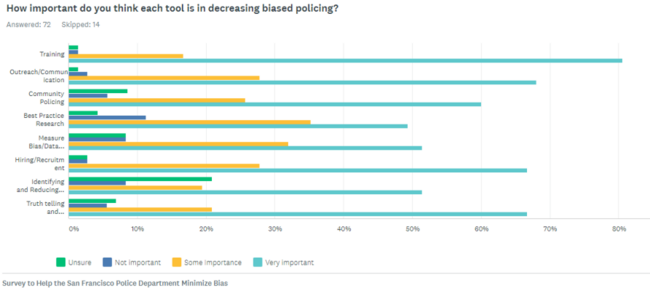
Figure 2: Community Perceptions of Tools to Reduce Bias In analyzing the survey results, we quickly found that public education is needed to improve community perceptions of the SFPD. Not only did our community survey rank training as the number one tool the community believed would decrease bias, answers in the comment sections also suggested that the public was unaware the SFPD has already implemented many of the reforms the community recommended. One respondent suggested "letting the public know how the SFPD has a culture of accountability, community events where cops are present and positive. I know some of the young people becoming cops and they are good people, not the good old boy network it has been deemed. Share this. Tell their stories."
Image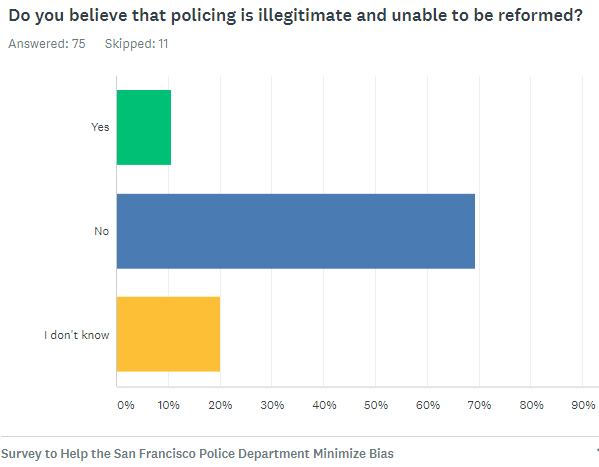
Figure 3: Community Perceptions of Police Legitimacy While 10.53% of those surveyed believe policing is illegitimate and unable to be reformed, most San Franciscans believe that bias can be decreased. One individual noted: "I do appreciate that whatever you were doing over the last year significantly reduced police shootings."
Community members ranked the tools for decreasing bias in the following order of importance:
- Training - 80.56% ranked it very important with a weighted average of 4.57
- Outreach/Communication - 68.06% ranked it very important with a weighted average of 4.31
- Hiring/Recruitment - 66.67% ranked it very important with a weighted average of 4.25
- Truth Telling and Reconciliation Work - 66.67% ranked it very important with a weighted average of 4.14
- Community Policing- 60% ranked it very important with a weighted average of 3.97
- Best Practice Research - 49.3% ranked it very important with a weighted average of 3.79
- Measure Bias/Data Collection Analysis- 51.39% ranked it very important with a weighted average of 3.78
- Identifying and Reducing the Risk of Bias in High Discretion of Crime Controlled Focus Activities- 51.39% ranked it very important with a weighted average of 3.5364
Below, in order of importance to the community, is a brief summary of 1) how each tool can be used to improve community perceptions of the SFPD, 2) concrete recommendations, and 3) potential metrics useful for judging the effectiveness of each effort.
Training for SFPD Employees: The SFPD should not only continue bias training in the academy and during ongoing professional development trainings, but also educate the public about these trainings. Only 40% of the community knew that the SFPD has been training officers about cultural diversity since 1965. Ongoing cultural opportunities that enable the SFPD to learn about the ever-changing diversity of San Francisco should be increased and shared with the public.
Recommendations.
- Continue to include anti-bias training into academy courses, particularly those related to community policing and engagement.
- Encourage all officers to attend cultural events and activities, whether on-duty or off-duty, as part of ongoing professional development.
- Continually review current training with an eye toward improving content, retention, and accountability.
- Improve community awareness of existing officer anti-bias training. This could be done through the department web site, through fliers or other literature, or through classes that would allow members of the public to experience SFPD course material themselves.
Metrics.
- Ongoing surveys aimed at a representative sample of San Franciscans testing their awareness of officer training programs
- Proportion of officers trained in bias-related courses and comparative rates over time
- Officer involvement in community cultural events and activities
- Enrollment numbers and feedback from Community Police Academy initiatives
Outreach and Communication: Our survey showed that 88.16% of respondents had read about bias in the SFPD, compared to 32.47% who had personal experiences or 50% who knew someone with a personal experience. This shows that San Franciscans are more likely to form their opinions about bias within the SFPD from the media than from personal experiences. Therefore, positive outreach and communication through the media would likely have the greatest impact on the public’s perception of the SFPD.
The SFPD should work on educating the public about its diversity, its training process, types of employees (officers, cadets, patrol special, etc.) and recent reforms. For example, only 47% of those surveyed knew that the SFPD has officers who speak over 300 languages. While the community is requesting more outreach and communication, comments in the survey demonstrate that education is not the same as building trust. In the words of one respondent, "you don’t just get credit because those things exist." The Community Police Academy is an important program to help members of the community to learn more about the SFPD and to build trust.
Recommendations
- In line with DOJ-COPS recommendations 26.2 and 26.3, develop a strategic communications plan to clearly communicate SFPD’s bias minimization efforts. The plan should address all available communication methods (web, print, social media, advertising, etc.).65
- Build relationships with key reporters, media outlets, and other influencers to expand awareness of SFPD reforms
- Compare and contrast SFPD efforts with other agencies around the country. Identify areas for improvement while highlighting successes.
- In line with DOJ-COPS recommendation 25.3 and 26.1, develop a concrete outreach strategy aimed at transmitting bias minimization efforts to a wide range of community organizations. This could be done through the Community Engagement Division or Community Police Advisory Boards.66
- Expand access to, and awareness of, the Community Police Academy. Tailor curricula to community interests as defined in other outreach efforts, and weave examples of anti-bias training into courses.
- In line with DOJ-COPS recommendation 26.1, reinvigorate and reaffirm the role of Chief’s Advisory Forums in providing diverse communities with an opportunity to have input on anti- bias trainings, policies, and other initiatives.67
Metrics.
- Volume of media reports discussing bias and SFPD.
- Comparisons of social media reactions to SFPD stories over time.
- Community survey responses, as compared over time.
- Enrollment numbers and feedback from Community Police Academy initiatives.
Hiring/Recruitment: While continued recruitment and diversity in the SFPD is and should continue to be a high priority, comments in the community survey suggested that many community members erroneously believe that a majority the sworn members of the SFPD are White.68 Additionally, less than half (47.22%) of respondents knew that the SFPD has over 300 officers who speak one or more languages in addition to English. The SFPD should seek community outreach and educational opportunities that will highlight its diversity.
Recommendations.
- As part of the strategic communications campaign, highlight the differences between the “stereotype” of SFPD and the actual composition of its workforce
- Increase multi-language outreach efforts, affording bilingual officers the change to showcase and practice their skills while building relationships with linguistically diverse communities
- Expand recruitment efforts focusing on students in local college and university language programs
Metrics.
- Demographic and linguistic composition of recruits and academy classes
- Community survey responses, as compared over time
Truth Telling and Reconciliation Work: "We are all bias[ed] and reconciliation is the answer," said one survey respondent. Although truth telling and reconciliation in the context of policing will differ from the process that inspires it, acknowledgement of past harms and honest dialogue about potential steps forward may be key to healing the relationship between SFPD and specific communities. Feedback about the SFPD's apology to the LGBTQ community generated the most positive comments in the survey. This indicates that additional work should be completed in this area, including education on bias by proxy and how to prevent it.
Recommendations.
- Consider public engagement efforts similar to those aimed at the LGBTQ community that acknowledge past missteps and demonstrate commitment to change
- Include truth-telling sessions or focus groups into the ongoing repertoire of the Community Engagement Division
- Acknowledge differing opinions about the role and nature of police work while clearly articulating SFPD point of view
Metrics.
- Post-session surveys
- Community survey responses, as compared over time
Community Policing: Survey respondents want "more visibility and outreach to the different organizations, communities and specially at risk kids." The SFPD should provide bias training for community watch groups and neighborhood patrols, increase opportunities to support students in schools and to work with communities with historical tensions with the SFPD and diversify the methods used to advertise community events like coffee with a cop. Survey respondents simultaneously expressed that they wanted the SFPD to participate in more community events and that they mistrusted the motives of publicizing or communicating the results of these events.
Recommendations.
- Build upon the success of current programs such as the Police Athletic League
- Work with local youth organizations to promote law enforcement officers as a resource rather than a source of punishment
- Increase police outreach at community events, especially those affiliated with historically marginalized populations
- Remain mindful of how the publicization of these activities may be misunderstood or misconstrued
- In line with DOJ-COPS recommendation 43.4, conduct outreach with activist and other groups that may be less supportive of policing.69
Metrics.
- Comparison of crime statistics relevant to targeted communities over time
- Feedback from SFUSD on performance of School Resource Officers
- Data indicating officer participation rates in community events
Best Practices Research: The SFPD should encourage more collaboration between units, stations and other city departments. In the words of one working group member, "this work is never 'one and done.' It is ongoing, as both society & policing methods evolve." The community expects the SFPD to be a leader in policing reforms.
Recommendations
- Stay informed of policing trends related to bias with an eye toward developing nation-leading bias reduction policies
- Partner with informed stakeholders from the academic and legal communities to gain broad understanding of bias-reduction tools and techniques
Metrics.
- References to best practices research in bias-related policy documents
- Memorialization of stakeholder input in department response grids
Measure Bias/Data Collection: The SFPD should partner with academic researchers to learn more about best practices and areas that need improvement. Additional evaluation should include focus groups and surveys.
Recommendations.
- In line with DOJ-COPS recommendation 25.3, collect data related to alleged incidents of biased policing to determine patterns and correlations that may explain how and why these types of incidents occur
- Develop a method of categorizing alleged incidents of biased policing that allows for comparisons across different types of bias
- Work with other city agencies to collect citywide data regarding allegations of bias
- To the extent possible, make relevant data accessible to the public
Metrics.
- Realization of a data-driven ‘bias scale’ for use in classifying and/or prioritizing allegations of bias
- Use of data analysis in reporting, training plans and, for instances of implicit bias, in the disciplinary process
Discretion as a Means of Reducing Bias in Encounters Related to Minor Infractions and Non-Criminal Situations (Identifying and Reducing the Risk of Bias in High Discretion of Crime Controlled Focus Activities): Officers must exercise discretion and use their judgement when deciding whether to enforce minor infractions and, in situations where no crime has occurred, whether the matter should be referred to another City agency or community-based organization. Working group members expressed concern that discretion may be applied unequally across demographic groups in these instances. While SFPD data does not necessarily support these concerns, the use of de-escalation techniques in place of enforcement may give the impression that officers are neglecting their duties. Of survey respondents, 20.83% indicated that they were unsure about this topic, suggesting that additional education about what this tool is and how it is utilized might be needed before it can improve community perceptions about the
Recommendations.
- Consider developing a disengagement policy or trainings that provide a framework for thinking about the enforcement of minor infractions and non-criminal situations
- Work with the Department of Police Accountability to develop a common understanding of officer disengagement in instances of enforcing minor infractions and the handling of non- criminal call incidents
- Include the topic of discretion and minor infractions in community outreach efforts.
- In line with DOJ-COPS recommendation 27.7, address the topic in continually evaluate Force Options Training for opportunities to improve discussions related to bias.70
Metrics.
- Increased community knowledge of the topic, as evidenced in surveys
- Training records demonstrating wide knowledge of the topic among the force
- Bias Within the Workforce
An organization’s culture and the way it interacts with outside individuals are inextricably linked. Because norms within an organization “define what is encouraged, discouraged, accepted, or rejected,”71 any effort to reform police interactions with the people they serve must consider intra-workforce interactions. Quite simply, bias and prejudice have no place in an organization whose goal is to provide “safety and respect for all.” Minimizing bias within the organization will require leveraging the following tools and, as circumstances warrant, consistently recalibrating how each is used:
- Training
- Best Practices
- Measure Bias/Data Collection and Analysis
- Recruitment/Hiring/Promotions
- Bias Investigations
Specific recommendations for how to affect change with each tool follow below.
Training: An effective training program to minimize bias in the workplace should 1) be multidimensional, 2) tailored to specific audiences and their duties and roles, 3) incorporate scenarios that highlight key decision points where bias within the workforce can occur and 4) include an evaluation process (see DOJ-COPS recommendation 27.1).72 Department-wide initiatives not only require acknowledgement of organizational culture, but also require strategic messaging from Department leadership that clearly sets bias minimization as a priority.
Recommendations:
- Launch an Internal Communications Campaign: A top-down messaging effort, beginning with command staff and filtering down the chain of command, would set the tone and demonstrate a commitment to SFPD’s purposeful intention to address bias within the workforce. This campaign, perhaps conducted via e-mail, should also serve as a feedback mechanism for leadership to gather input from members that could be used to identify training needs and develop course curriculum.
- Surveys: Conduct anonymous surveys to current and former members including questions specifically relating to bias within the workplace. Department leadership should review responses to determine the training priorities and offer training based on results.
- Conduct Ongoing Workforce-Wide Training: Continue the core Implicit Bias training for all employees (sworn and civilian) to maintain awareness of how biases impact everyday interactions. This training should include illustrative examples of implicit bias that span professional disciplines (medical treatment decisions, sports, education, the courts) to show implicit bias manifests in a number of contexts.
- Conduct Ongoing Management and Supervisor Training. Leaders set the tone of an organization’s culture. Because their decisions have an impact on a larger number of employees, they have the most power to minimize or exacerbate biases within the Department. Training addressing basic principles such as affinity bias, confirmation bias, attribution bias, conformity bias, the horns effect, the halo effect, gender bias, ageism, and prejudice response should be part of an ongoing training plan required for all Department leadership positions.
- Conduct Specific Unit/ Division training in small teams. Scenarios (including role-playing) relating to areas where bias can play out in the workplace (training, assignments, promotions, meetings, decision making) and debriefings throughout academy course allow participants to experience real-world situations where bias may manifest. Training should allow for team dialogue and personal reflection time.
- Consult with Outside Experts: Curriculum should not be developed in a vacuum, but with best practices in mind and, as appropriate, with an academic partner.
Review and Evaluation of Peer Agency Policies: Bias should be addressed on an individual and institutional level. While SFPD has served as a national model for policies aimed at minimizing bias, other departments, particularly peer agencies on the West Coast, as well as private sector entities, also provide a wealth of experience from which to draw.
Recommendations:
- Establish and expand roles dedicated to improving Diversity and Inclusion: Addressing organizational diversity is becoming a national best practice in the private sector. Leading private-sector companies have created new positions dedicated to addressing diversity and inclusion in the workplace. Diversity & Inclusion Managers/Directors typically work closely with recruiting teams in human resources to support commitments to diversity and inclusion efforts. SFPD could benefit from creating a specified unit to strategically address diversity, equity and inclusion within the SFPD.
- Maintain an Outward Image that Embraces Diversity: Companies across the nation tackle bias by widely distributing stories and pictures that portray stereotype-busting images – posters, newsletters, annual reports, speaker series, podcasts. Many studies show that the mere positive image of specific groups of people can combat hidden bias. SFPD does this well with regard to recruitment and website imagery but may consider tailoring outreach plans to specific communities of interest.
- Incorporation of Best Practices into Training Curricula. Training programs that allow for introspection, consciousness-raising, the reduction of barriers between subjects and a particular outgroup; that foster exposure to stereotype-busting images and examples and that incorporate feedback from leadership have all had wide success in other jurisdictions and may serve as a model for SFPD training modules.
- Empower Diverse Communities: Internal and public working groups are often ethnically diverse, but race is not the only factor that should be considered when attempting to achieve representation from the widest swath of viewpoints. Working groups and internal meeting membership should thus represent the widest possible spectrum of ideological, racial, gender, and professional perspectives.
- Communication Strategies. Outward communication campaigns should highlight examples of pro-diversity behavior and showcasing leadership acceptance and support of changing culture norms.
Recruitment: Recruiting new staff members from diverse backgrounds is already a priority at SFPD, however, expanding on these efforts could help mitigate bias within the organizational culture.
Recommendations:
- Audit job announcements and revise to speak to a larger demographic.
- In line with DOJ-COPS recommendation 25.3, Focus on diverse candidate sources, such as online groups dedicated to women entering the workforce, platforms dedicated to LGBTQ rights, etc.73
- Create a diverse candidate referral program: encourage internal members from diverse backgrounds to send job openings to their networks.
- Continue to work with San Francisco Department of Human Resources to examine the possible presence of systemic implicit bias in the hiring process
- Ensure candidates are evaluated by a diverse group of SFPD members once the candidate has successfully advanced through the DHR exam process
- Offer internships sourced from local Community Based Organizations.
Hiring: The statewide California Peace Officer Standards and Training organization (CA POST) sets clear guidelines for background investigation criteria yet leaves many aspects to the discretion of the hiring manager. Management discretion has been partially addressed by AB 846, which establishes POST and job description guidelines for bias screening. SFPD should review this law and create rules around the aspects that CA POST criteria has not clearly defined.
Recommendations:
- Review and verify current recruitment strategies, applicant pools, selected candidates and candidates who successfully make it through the Academy in order to determine whether certain demographics are impacted by either recruitment or pre-appointment training.
- Establish and publish clear criteria in advance of making hiring decisions, thereby reducing subjectivity and minimizing any potential bias in the decision-making process.
- Remove demographic characteristics like name, race, gender and country of origin from file from all hiring packages and resumes before review.
- Ensure that diversity in the Background Investigations Unit reflects the diversity of San Francisco and that all members of the unit keep current on anti-bias training.
Promotions: Promotional decisions have a broad impact on organizational culture. The attitudes and belief systems of supervisors and managers creates a ripple effect that can either mitigate or advance bias in the workplace.
Recommendations:
- Review data relating to who is taking promotional exams and how the promotional list is created and advertised.
- Determine whether members are self-selecting out of exams to avoid administrative assignments, and diversify the types of roles into which members may promote.
- In line with DOJ-COPS recommendation 90.2, provide transparency regarding the promotional process. Develop and implement strategies to increase diversity in key assignments that help establish the department’s future leadership cadre.74
- Anonymize demographic and personal identifying information for first-level review of internal promotion candidate files.
- Create a multi-rater review system for promotions, perhaps with the aid of software algorithms, to anonymize feedback from members of all ranks that have interacted with the employee under consideration for promotion.
- In line with DOJ-COPS recommendation 93.1, improve communications between Police Employee Groups and Command Staff, particularly with respect to strategies for reducing bias.75
- Review Department Awards Policies for Possible Biases. For example, the subgroup noted that the Crisis Intervention Team (CIT) awards more women compared to the department-wide awards/medal issuance, and that women and minorities were awarded fewer Medals of Valor at all levels (Gold, Silver and Bronze). Compare department awards process to CIT awards process to find potential pathways to diversify awards/medal recipient demographics.
- Review SFPD’s current mentoring system to determine whether chain of command structure within ranks impedes officer’s ability to access mentors, and how this may impact promotions.
- Review General and Special assignment process including how Field Training Officers are assigned. Data may reveal whether supervisory subjectivity is a factor for general or special assignments.
- Performance Improvement Plans and Supervisor Evaluations: Confirm current performance evaluation process and schedule. Working with the Department of Human Resources, SFPD should finalize the law enforcement-specific performance evaluation template with an eye toward inclusion.
Bias Investigations: Misconduct investigations and disciplinary action strengthen performance by ensuring that organizational rules and standards of conduct are upheld. Holding staff accountable through disciplinary investigations and action is necessary to provide a highly functioning public service.
Administrative investigations and discipline are thus central to creating a workforce that minimizes instances of biased policing.
Recommendations:
- Compare statistics from the 2016 DOJ-COPS report with current data and determine whether disciplinary actions have continued to be applied unevenly across officer demographic groups, particularly when segmented by race, gender, and sexual orientation.
- Compare data before and after recent bias-related policy updates, such as those made to DGO 5.17; adjust policies as changing circumstances warrant.
- Publicly report the findings from the above two recommendations
- Take proactive approaches to intervention when Bias is alleged or suspected. SFPD should not simply wait for allegations of biased policing before taking action. Agencies should routinely review incidents for evidence of bias.
- Promptly, seriously, and thoroughly investigate all allegations of bias. This should be done internally or, depending on the nature of the allegations, externally or by a City partner.
- Take appropriate action. When investigations determine that bias misconduct has occurred, SFPD must take appropriate remedial action in the form of disciplinary action up to and including termination. Recent updates to Department General Order 5.17, “Bias-Free Policing,” and an ongoing review of the Disciplinary Penalty & Referral Guidelines for Sworn Members that covers instances of biased policing are an important first step in what should become regular reviews policies and disciplinary measures related to bias.
Bias and Success Metrics: Measuring the success of any reform effort requires establishing objective metrics. This is particularly true, although challenging, with respect to eliminating bias, as allegations are often based on perceptions or may be difficult to sustain given that bias incidents are often reported as one-on-one occurrences. From an external standpoint, bias may be indicated by measures of how police interact with certain demographic groups, especially when compared to the group’s representation in the general population. Internally, similar strategies benefit from the wealth of information available to employers about their employees, but are hindered by a lack of obvious indicators.
The State of California, the City and County of San Francisco, and the SFPD itself have all passed regulations and policies aimed at requiring the collection and reporting of data related to measuring biased policing. While not directly aimed at measuring internal bias, information derived from some of these indicators may prove useful, when combined with qualitative information, in measuring bias within the workforce. By policy, examples of potentially useful metrics include:
- Assembly Bill 953, also known as the Racial and Identity Profiling Act: This bill established a number of data collection requirements related to assessing how and when officers stop vehicles and individuals. Data collected about stop incidents is tied to the individual officers involved, thereby providing an indicator of potential bias directed by individual officers toward the public. These indicators could help establish patterns of individual behavior that may inform internal investigations into allegations of workplace bias.
- San Francisco Administrative Code Chapter 96A: A precursor to AB 953, San Francisco Administrative Code 96A details a number of reporting requirements designed to increase transparency into police activities and members of the population subjected to them. In addition to providing relevant data points to discern potential incidents of biased policing, this statute also calls for tracking the number and disposition of publicly-generated complaints alleging bias, which may serve as a factor in building an overall data profile for analysis of investigated officers. Although many of the reporting requirements associated with this ordinance expired in 2018 with the passage of AB 953, previously-collected data may still be exploited for trends and other analysis.
- Department General Order 5.01, “Use of Force”: In addition to requiring collection, analysis, and reporting on a number of factors related to Use of Force, including subject and officer demographic information, DGO 5.01 also requires data collection on supervisorial actions, which could provide a window into potential differences in treatment by the supervisor among their subordinates.
The mechanisms above, though useful, cannot be expected to provide a comprehensive picture of workplace interactions as their primary goal is to detect disparities in data of police activity aimed at the general public. New metrics should be established and collected that aim to provide similar levels of transparency and knowledge about intra-workforce dynamics. On an annual basis, the following datapoints will be evaluated, analyzed and reported to the public:
Training- Participation Rates: Optional trainings should be analyzed to determine if attendance, whether one-time or periodic, meets Departmental requirements. The Department should establish clear participation rate goals, taking into account whether a particular event (i.e., an allegation of biased behavior) should trigger the training or if it should be standard across all employment classifications.
- Internal Assessments: Effectiveness of training should be continually evaluated, through methods such as a comparative analysis of the occurrence of bias-related incidents before and after training, participant surveys, and follow-up courses
- External Assessments: Continued cooperation with outside entities such as academic partners and independent oversight boards provides an ongoing method to evaluate and amend curriculum as needed. Participation rates should be shared with external partners for comparison with national best practices.
Review and Evaluation of Peer Agency Policies
- Procedural Review. In line with DOJ-COPS recommendation 85.1, the Department should require a review of best practices in accordance with all training and policy updates related to bias within the workforce.76 While the Department already requires review of relevant documents such as the DOJ-COPS report on 21st-Century Policing, they may wish to add additional material to this list, such as studies on implicit bias.
- Referencing Requirement. SFPD DGOs often reference internal documents, but the references section should be expanded to cite best practices from other jurisdictions when they inform the development of Department policies. The Department should consider a requirement of one verifiable external reference for all training documents and policies related to bias within the workforce, including anti-discrimination policies and recruitment, hiring, and promotional procedures.
Recruitment
- Job Announcement Modification. Compare demographics of applicants responding to an un- edited job announcement with those of one revised to appeal to a wider audience.
- Candidate Sourcing. Perform cost-benefit analysis on individual recruitment events, and adjust to focus on those events, locations, and mediums that yield the most diverse applicant pool.
- Referral program. Over time, develop a granular understanding of referral success rates and offer escalating incentives for officers who establish a successful recruitment track record.
- Internships. Track the trajectory of all interns sourced from community-based organizations. How many of these interns eventually become employees?
Hiring
- In line with DOJ-COPS recommendation 81.3,track success rates of different demographic groups progressing through each stage of the recruitment cycle.77
- Comparison of demographics of employees hired in the year prior to implementing recommendations above (clarification of criteria; removal of demographic characteristics from applicant files).
Promotions
- Collect data relating to who is taking promotional exams and how the promotional list is created and advertised.
- Track and monitor promotion rates for different demographic groups within the Department and compare rates before and after recommendations are implemented.
Bias Investigations
- Collect data and analyze trends in SFPD bias investigations. Academic partners, other city agencies analysts should monitor to determine if instances of bias are increasing or if particular groups are being targeted
- In line with DOJ-COPS recommendations 28.1 and 28.4, consider including data collected on individual officer stops, as compared to stop rates of an officer’s peer group (taking into account differences between stations, assignments, and shifts) as an indicator in the Early Intervention System.78
- In line with DOJ-COPS recommendation 28.1, develop interventions beyond discipline to address possible biased behaviors identified in investigations.
- In order to avoid bias in disciplinary recommendations, SFPD should make reasonable efforts to ensure diversity in the chain-of-command of the Risk Management Office.
Ongoing Review
SFPD should review the 2020 status of the USDOJ findings referenced above and any other recommendations relevant to understanding bias within the Department to track how SFPD has modified and updated its internal processes.79
- Bias by Proxy
Profiling by proxy occurs whenever a community member seeks police assistance because of their own biases, making the department an instrument of their bias. Recognizing the role of bias by proxy and taking steps to prevent it is a key step to breaking the cycle of distrust between communities and police. Attaining a complete understanding of the factors that contribute to social biases, and how members of the SFPD are weaponized by individuals who hold such beliefs, is essential to developing an implementation plan to address bias by proxy. Because it is primarily a social problem, comprehensively addressing bias by proxy in San Francisco will take cooperation and leadership among the Police Department, Office of the Mayor, Department of Emergency Management, District Attorney’s Office, and the City’s oversight bodies. That being said, there are a number of steps that SFPD can take to help mitigate the impact of bias by proxy, and doing so will both further the department’s strategic plan80 and complement existing training on bias, community policing, use of force, and educational and community outreach efforts. While during our proceedings the Department completed a policy that minimizes the use of booking photos,81 there a number of other steps the Department could take to mitigate bias by proxy, including:
- Training - To minimize the impact of bias by proxy, the San Francisco Police Department should consider how potential biases in underlying calls for service may interact with internal biases in the workforce. This dynamic can be mitigated through on-going implicit bias training and the application of critical thinking skills. In addition, the Department, potentially in collaboration with an academic partner, should develop training aimed at officer-level interaction with members of the public, including which questions to ask to help identify bias by proxy incidents. Additional training requirements are set forth in DGO 5.17.
- Education – The multifaceted nature of bias proxy by necessitates building a common understanding of the problem not just within SFPD but also within the communities it serves. Community education, conducted in partnership with external partners, stakeholder groups, and SFPD members will build a common operating picture, the first step necessary to addressing the challenge. This education campaign should include information about legislative developments such as the CAREN Act and Jones-Sawyer.
- Collaboration - Encourage partner organizations, such as the Department of Emergency Management and the California Highway Patrol to increase awareness of, and take steps to mitigate bias by proxy when fielding requests from the public.
- Administration - SFPD should work to immediately remove any images, language, or references that may perpetuate negative stereotypes.
- De-escalation – De-escalation skills are imperative when responding to calls for service rooted in bias. Scenario-based training, as well as the deployment of units specialized in community engagement to calls identified as potentially rooted in bias, will improve the ability of officers to de-escalate conflicts between residents.
- Data Analysis – Review and analysis of calls suspected of exhibiting bias by proxy may reveal trends or patterns that will assist the Department and other city agencies in tailoring other efforts to specific neighborhoods and contexts.
The Department should consider the following factors when devising an implementation plan:
- Feasibility - Whenever possible, the Department should fold considerations related to bias by proxy into the pre-existing organizational framework. This will ensure a broad understanding of the issue and also minimize resources necessary to implement the strategic plan.
- Impact Level – the Department should focus on how each initiative impacts the use of Department resources, empowers individuals to combat bias with their critical thinking skills, and more importantly, its overall impact to the community in the form of a reduction of bias by proxy and an increase Department accountability.
- Timing and Effort - Education and outreach programs should be ongoing, and ready to be distributed before the end of the year. Training reforms, at both the citywide - and departmental levels, should be completed within a year. A detailed roadmap for specific working group recommendations follows.
Table 3: Bias by Proxy Recommendations, Priorities, and Metrics Recommendation Priority* Metrics [Virtual] Bias by Proxy Town Hall – feature interagency partners, focus on community education, provide policy and training updates, and solicit community feedback on how to approach bias-by-proxy. 1 Viewership numbers When alleged bias by proxy incidents occur, review and evaluate officer behavior to ensure bias-free responses, and verify through examination of body-worn camera footage, and statements of involved parties 1 DPA and IAD audits of public complaints Work with the Department of Emergency Management to build a data set, to be regularly updated, on a range of police practices including both dispatched and non-dispatched calls potentially exhibiting bias by proxy. 2 Use-cases for collected data Each District Captain should assign a member liaison to DEM to complete the feedback loop on data collection, facilitate the Department’s review of procedures and practices that directly impact SFPD, and facilitate supervisory and command level review of bias by proxy metrics. 2 Increased identification of potential bias by proxy calls Create a Department Bulletin or Notice outlining how officers in should best to handle bias by proxy in the field. This should complement the verbiage on Bias by Proxy in the newly-adopted version of DGO 5.17. 1 Policy Sign-off records Develop a community education pamphlet on bias by proxy. These pamphlets should be available at each District station, and Captains and their staff should distribute the material at community engagements. 3 Community survey testing awareness of bias by proxy Establish clear guidelines in supervisory and command level review of bias by proxy incidents and related data points. 3 Conduct bi-annual audits of data collection systems to ensure accuracy and refresh data collection parameters as understanding of bias by proxy evolves. This should be done in coordination with DEM, and audits should be made available to the public online. 2 External reviews validating that parameters are in line with best practices Strengthen and review policies annually to support adequate response to bias by proxy investigations. 2 Bias complaint volume Help coordinate and launch a City-wide initiative of interagency bias training, to raise awareness of bias by proxy. 2 Community survey Prioritize mediation or restorative justice programs and efforts, particularly in response to any complaints of biased policing but also as a proactive measure to build community trust. 1 After action participant surveys Integrate bias by proxy into city-wide and interagency training. Early compliance with the Department goals on bias by proxy training provide additional metrics for the hiring/promotion process. 3 Training participation rates and student surveys *Implementation priorities subject to evolving budgetary and resource considerations
Ongoing Action Items
The Department should continually monitor gaps in its own knowledge and consider adding additional action items to its implementation plan as understanding of bias by proxy continues to evolve. Some items to continually monitor include:
- Shift Department dependence on raw data such as stops, citations, summons, and arrest numbers and toward a methodology for measuring bias-free policing efforts as a measure of productivity.
- Explore how bias by proxy impacts police responses toward unsheltered communities.
- Consider any patterns or trends evident in caller data when deciding how to prioritize efforts to educate the public on bias by proxy.
- Maintain awareness of the evolution of bias by proxy, including through social media
Section IV: Conclusions and Way Forward
- Conclusions and Way Forward
When the Executive Sponsor Working Group on Bias first began meeting in 2017, its discussions were centered on the topic of bias in San Francisco and the national implications of the group’s discussions were merely a backdrop. Given the many events that have taken place since the group first met and the elevated attention to bias in policing, we publish this strategic plan with the full understanding that the nation is watching San Francisco. As importantly, we also publish this plan with the knowledge that the people we serve will hold us accountable to follow through on our commitments. We embrace this opportunity to lead both locally and nationally.
Since 2016, the San Francisco Police Department has taken a number of steps to minimize the impact that each dimension of bias has on our work. In addition to numerous community engagements on the subject, including the Executive Sponsor Working Group on Bias, the Department also instituted a regular audit of electronic devices for the use of biased language, established the “Not on My Watch” pledge that calls on Department members to hold each other accountable for minimizing bias, revamped and expanded the number and variety of training courses related to bias, and ensured that all members receive foundational training in minimizing implicit bias. The Department now submits quarterly reports which analyze stop data for patterns that may indicate biases toward specific demographic groups, and provides similar analyses for data related to uses of force. Perhaps most significantly, the Police Commission recently approved significant updates to DGOs 5.17 and 11.07. Changes to DGO 5.17 “Bias- Free Policing,” cement the Department’s zero-tolerance policy toward explicit bias and includes nation- leading guidance for countering bias by proxy, and updates to DGO 11.07, “Prohibiting Discrimination, Harassment, and Retaliation,” expands the anti-bias protections applicable to SFPD employees.
As described in this strategic plan, there is much more work to be done to minimize bias both in the Department and in San Francisco in general. The Department cannot accomplish its goal of minimizing bias alone. Changing public perceptions of the police cannot happen without a change in behavior and policy at the Department. Law enforcement officers cannot extinguish bias within their ranks without a deeper understanding of the communities they serve. Law enforcement cannot reduce the likelihood of responding to a call rooted in biases of the general public without the public examining its own implicit biases. Training plays an important role in identifying and eliminating bias, but training needs evolve over time. Therefore, the Department shall perform an ongoing evaluation of training to ensure that participation targets have been met and that the content remains up-to-date and reflective of best practices. Improvements in each dimension lead to improvements in the others, and the reverse is also true.
First and foremost, we must ensure that Department members continue to serve each community and demographic impartially, respectfully, and professionally. Achieving a baseline understanding of how officers perceive the community will facilitate this goal. This plan has developed concrete steps that will open a window to the impressions, implicit biases, ideas, and attitudes prevalent in the workforce that impact how SFPD performs its work. Ensuring the 100+ recommendations in this plan will require the Department to audit and monitor their implementation, report out on successes and failures on an annual basis, and review this strategic plan periodically but no less than every five years to update and conform it with ongoing developments.
Public engagements, listening sessions, and working groups not only provide Department members with opportunities to change their perceptions of community members, they also provide the public an opportunity to improve their understanding of police officers. Our survey revealed a public eager to engage with the Department and that believes in the feasibility of legitimate reform. Harnessing the power of community engagement will require improved communication techniques across a wide variety of media and occasions, as well as improving the ability of the Department to accept and incorporate ideas from a wider variety of sources, including those outside the law enforcement profession.
Improved communication helps restore trust, which creates new opportunities for members to be accountable not only to the community, but also to one another. A better understanding of the community will improve recruitment efforts, hiring decisions and processes, and promotional considerations. It will also improve our understanding of the core traits necessary to succeed in law enforcement and reduce perceptions of differences that influenced decisions about what kinds of people join the profession and the career opportunities available to them once they do. The emphasis on data in this strategic plan will help the Department recognize and address inequities and disparities that impact our workforce and that could also filter into how we approach the outside world.
An improved understanding of dynamics internal to the Department and of the relationship between police and the community, will allow members to better identify signs of bias in the general public. In partnership with other city agencies, the Department commits to remain at the leading edge of developing a comprehensive approach to addressing calls for service that are rooted in bias.
Communications with the public about this issue and future policy revisions that are responsive to the changing ways that bias manifests in society will also improve our relationship with the public as we demonstrate our ability to lead on the topic of addressing bias by proxy.
Moving forward, the SFPD Strategic Plan to Minimize Bias should not be thought of as a static document that provides a roadmap with a final destination. Rather, it is meant to be a guide that builds upon ongoing work and identifies the next steps necessary to create measurable improvements across all four dimensions of bias. As the Department strives, along with its academic, interagency, and community partners, to fully minimize bias, the need may arise in the future to amend or otherwise improve this document. Leadership requires not only setting an example, it also requires a commitment to constant improvement and evaluation. Leading on this topic is not only the right thing to do, it is imperative to our commitment of delivering “Safety with Respect.”
Appendix
- Appendix A: Police Perceptions of Community Proposed Survey Questions
Demographic Questions
- How long have you worked with SFPD?
- Do you live in San Francisco?
- How do you identify (e.g., gender, race, sexual orientation, etc.)?
- What is your age range?
Perceptions of the Community (Scaled Response: 1—lowest & 10—highest)
- On a scale from 1-10, believe we have achieved racial equality in America?
- On a scale from 1-10, do you believe we have achieved racial equality in San Francisco?
- On a scale from 1-10, believe we have achieved gender equality in America?
- On a scale from 1-10, do you believe we have achieved gender equality in San Francisco?
- On a scale from 1-10, do you believe local, state, or the federal government should intercede to address issues of racial or gender inequality?
- If so, what are some measures that should be taken?
- On a scale from 1-10, how proud are you to be a police officer?
- On a scale from 1-10, how important is the work police officers do?
- On a scale from 1-10, how important is the work San Francisco Police Officers do for the San Francisco community?
- On a scale from 1-10, do you think the public appreciates the work that you do?
- On a scale from 1-10, do you believe the public understands and supports the work you do?
- On a scale from 1-10, do you believe the African American community in San Francisco understands and supports the work you do?
- On a scale from 1-10, do you believe the WhiteWhite community in San Francisco understands and supports the work you do?
- On a scale from 1-10, do you believe the Latinx community in San Francisco understands and supports the work you do?
- On a scale from 1-10, do you believe the Asian community in San Francisco understand and support the work you do?
- Do you see yourself as part of the San Francisco community?
- Is there more the San Francisco Police Department can do to make you feel that you are part of the community?
- If you answered yes, what are some things the Department could do to make you feel more a part of the San Francisco community?
- Members of some racial/ethnic groups commit crimes at higher rates than others.
- Strongly Disagree
- Disagree
- Neither Agree Nor Disagree
- Agree
- Strongly Agree
- If you answered a or b above, which racial/ethnic groups do you believe commit crimes at higher rates than others?
- Members of some racial/ethnic groups commit crimes at lower rates than others.
-
- Strongly Disagree
- Disagree
- Neither Agree Nor Disagree
- Agree
- Strongly Agree
- If you answered a or b above, which racial/ethnic groups do you believe commit crimes at lower rates than others?
- Members of some racial/ethnic groups are more likely to be victims of crimes than others.
- Strongly Disagree
- Disagree
- Neither Agree Nor Disagree
- Agree
- Strongly Agree
- If you answered a or b above, which racial/ethnic groups do you believe commit crimes at lower rates than others?
- Members of some racial/ethnic groups are less likely to be arrested for the crimes that they commit.
- Strongly Disagree
- Disagree
- Neither Agree Nor Disagree
- Agree
- Strongly Agree
- If you answered a or b above, which racial/ethnic groups do you believe are less likely to be arrested for the crimes that they commit?
- In your role as a police officer, do you sometimes have difficulty engaging in conversation with members of the community who are outside of your race/ethnicity?
- Strongly Disagree
- Disagree
- Neither Agree Nor Disagree
- Agree
- Strongly Agree
- Are there things that the San Francisco Police Department can do to make it easier for you to engage in conversations with community members who are outside of your race/ethnicity?
- Do you participate in community engagement activities? If so, which activities?
- Do you find those activities to be helpful to you in your overall interactions with the public?
- Are you a member of a PEG group?
- There is bias in the San Francisco Police Department towards members of the public who belong to certain racial/ethnic groups?.
- Strongly Disagree
- Disagree
- Neither Agree Nor Disagree
- Agree
- Strongly Agree
- There is bias within the San Francisco Police Department between members.
- Strongly Disagree
- Disagree
- Neither Agree Nor Disagree
- Agree
- Strongly Agree
- How important do you think each tool is in decreasing bias in the San Francisco Police Department? (Very Important / Somewhat Important / Not Important / Unsure)
- Truth Telling and Reconciliation
- Measure Bias/Data Collection Analysis
- Identifying and Reducing Bias in High Discretion Crime Controlled Activities
- Best Practice Research
- Training
- Community Policing
- Hiring/Recruiting
- Outreach/Communication
- Appendix B: Bias Policies & Training at SFPD: 2016 v 2020
Bias Policies & Training at SFPD: 2016 v 2020 2016 2020 DGOS
- DGO 5.01 (Former version from prior to 2016 update)
- DGO 5.17 (Former version from 05/04/2011)
- DGO 11.07: Prohibiting Discrimination, Harassment and Retaliation (Former version from 11/25/02)
DGOS
- DGO 5.01 (Revised 12/21/16) – modified to include portion on “FAIR AND UNBIASED POLICING”
- DGO 5.17 (Revised 08/12/20)
- DGO 5.21: The Crisis Intervention Team (CIT) Response to Person in Crisis Calls for Service (New DGO eff. 12/21/16)
- DGO 5.22; Interacting with Transgender, Gender-Variant, and Nonbinary Individuals (New DGO - eff. 10.03.18)
- DGO 11.07: Prohibiting Discrimination, Harassment and Retaliation (Revised 05/20/20)
DEPT. BULLETINS/NOTICES:
- DB 12-055; DGO 5.17 Update Packet
- DB 13-021; LGBT Safe Zone Project
- DB 14-144; LGBT Resource Guide
- DB 15-249; “Not On My Watch” Pledge (began 12/03/15)
DEPT. BULLETINS/NOTICES:
- DB 16-079; Lesbian, Gay, Bisexual, Transgender, Queer, Questioning, and Intersex Resource Guide
- Various DBs/DNs - “Not On My Watch” Pledge (distributed bi-annually since 2015)
- DB 18-195; DGO 5.22 "Interacting with Transgender, Gender-Variant, and Nonbinary Individuals" Update Packet #58
- DB 19-016; SFPD Safe Place Program (formerly called Safe Zone Project)
- DN 20-102; DGO 11.07 Update Packet
- DN 20-125: DGO 5.17 Update Packet
- DB 19-152 (re-issue of 17-126) Monthly roll-call training focusing on Leadership, Procedural Justice, Fair and Impartial Policing, the President's Task Force on 21' Century Policing.
- DB 19-013; SFPD Climate Survey
- DB 18-114; Equal Employment Opportunity (EEO) Policy.
DHR:
1.(Video) Preventing Workplace Harassment Training (2 hours)
DHR:
- Introduction to Managing Implicit Bias (16 hours)
- Creating and Inclusive Environment- Managing Implicit Bias (8 hours)
- (Online) Implicit Bias Online Module (45 minutes)
- (Video) Preventing Workplace Harassment Training (2 hours)
- (Video) Ensuring a Diverse, Fair, and Inclusive City Workplace (1 Hour)
AO/CPT & OTHER SFPD TRAINING:
- Fair and Impartial Policing – 1 day class (offered to command level, March 2010)
- POST Racial Profiling/Bias Based Policing. (Museum of Tolerance Certified Instructors)
AO/CPT & OTHER SFPD TRAINING:
- Principled Policing 2016 through 2018 (and all new employees)
- Procedural Justice and Implicit Bias (8 hour)
- Critical Mindset and Coordinated Response (CMCR) 8 Hours
- Communication: Keeping your Edge (Post Learning Portal) 2 hours
- Crisis Intervention Training-40 HOUR
RECRUIT TRAINING:
- Biased Based Policing (Museum of Tolerance Certified Instructors) 2 HR
- Racial Profiling (Museum of Tolerance Certified Instructors) 4 HR
- Cultural Competency 24 HRS (bias component)
- LGBT Community Immersion Day 8 HRS (bias component)
- Interacting with Gender Diverse People and Sexual Orientation 4 HRS (bias component)
- Homeless Community Group 2 HRS (bias component)
- ADA Issues/Hearing and Visually Impaired 16 HRS (bias component)
- EEO and Discrimination 4 HRS (bias component)
- Limited English Proficiency 2 HRS (bias component)
- Victimology 6 HRS (bias component)
- CCSF Sanctuary City Policy 1 HR (bias component)
- Search and Seizure - 14 HRS (bias component)
- Laws of Arrest - 14 HRS (bias component)
- Arrest and Control - 120 HRS (bias component)
- Booking and Detention - 8 HRS (bias component)
- Pedestrians Approaches - 8 HRS (bias component)
- Use of Force - 12 HRS (bias component)
- Crimes Against Persons - 6 HRS (bias
- component)
- Domestic Violence - 14 HRS (bias component)
- Sex Crimes - 4 HRS (bias component)
RECRUIT TRAINING:
- Biased Based Policing (Museum of Tolerance Certified Instructors) 2 HR
- Racial Profiling (Museum of Tolerance Certified Instructors) 4 HR
- Cultural Competency 24 HRS (bias component)
- LGBT Community Immersion Day 8 HRS (bias component)
- Interacting with Gender Diverse People and Sexual Orientation 4 HRS (bias component)
- Homeless Community Group 2 HRS (bias component)
- ADA Issues/Hearing and Visually Impaired 16 HRS (bias component)
- EEO and Discrimination 4 HRS (bias component)
- Limited English Proficiency 2 HRS (bias component)
- Victimology 6 HRS (bias component)
- CCSF Sanctuary City Policy 1 HR (bias component)
- Search and Seizure - 14 HRS (bias component)
- Laws of Arrest - 14 HRS (bias component)
- Arrest and Control - 120 HRS (bias component)
- Booking and Detention - 8 HRS (bias component)
- Pedestrians Approaches - 8 HRS (bias component)
- Use of Force - 12 HRS (bias component)
- Crimes Against Persons - 6 HRS (bias component)
- Domestic Violence - 14 HRS (bias component)
- Sex Crimes - 4 HRS (bias component)
- Principled Policing 8 HRS
- Managing-Implicit Bias-8 HRS
- CIT Tactical De-escalation 10 HRS (bias component)
- Blue Courage (Heart and Mind of the Guardian) 1.2 HRS (bias component)
ROLL CALL TRAINING:
- Discrimination, Harassment & Retaliation (July 2010)
ROLL CALL TRAINING:
- Course Code RC2017-001 Autism Awareness
- Course Code RC2017-002 Procedural Justice: Voice
- Course Code RC 2017-003 Procedural Justice: Neutrality
- Course Code RC2018-001 Sanctuary City Policy
- Course Code RC 2018-003 SFPD Strategic Plan 1.0
- Course Code RC2019-003 Interacting with Transgender, Gender Variant, and Non-Binary Individuals
- Course Code RC2019-004 Procedural Justice: Respect
- Course Code RC 2019-006, Procedural Justice – Principle #4: Trust
- Course Code RC 2020-004, 21st Century Policing
PROFESSIONAL DEVELOPMENT:
1.Supervisory Leadership Institute (SLI)
PROFESSIONAL DEVELOPMENT:
- Leadership Development Institute (LDI)
- Supervisory Leadership Institute (SLI)
- POST Executive Development Course (EDC)
OUTSIDE CONSULTANTS:
1.Franklin Covey – Seven Habits for Law Enforcement; Leadership Development Training Program.
OUTSIDE CONSULTANTS:
- Blue Courage-The Heart and Mind of a Warrior-2-day course
- Inclusive Leadership-The Core of the Champion-3-day course
- Franklin Covey-7 Habits of Highly Effective People for Law Enforcement-2- day course
- Franklin Covey-The Speed of Trust
- National Organization of Black Law Enforcement Executives (NOBLE)'s Annual Training Conference
- Appendix C: Bias Free Policing Strategic Plan Recommendations
Bias Free Policing Strategic Plan Recommendations list 1-20 Police Perceptions of Community 1
SFPD should conduct anonymous surveys of officers to properly understand what SFPD officers think of their community. Results of this survey should be used to tailor the Department’s approach to the other lines of effort. 2
Integrate bias screenings into promotional exams, not only to help prevent the advancement of biased officers but also to understand how perceptions of the community change over time and over the course of a career 3
Include discussions of community policing and community relationships in all employee performance evaluations. Anonymize and aggregate data for use in guiding programs to improve relations between officers and the public. 4
Maintain awareness of research into officer attitudes, including national surveys from organizations like Pew and also state and community surveys from other organizations. Use such surveys as a benchmark in discussions with SFPD members regarding their own impressions of the community. 5
Conduct interviews with or deploy the above-mentioned survey to retired members. Not only will retired members be more likely to speak freely, their views may provide a contrast to those of current Department personnel. 6
Whether internally or in partnership with outside agencies such as City College, a wide variety of educational offerings should be made available to officers on topics relevant to the communities they serve, including the history of segregation, discrimination, racism, and economic deprivation both nationally and in San Francisco. 7
Establish a program through which officers could earn a “cultural competency” credential. This program could allow officers to pursue advanced topics in cultural studies relevant to specific San Francisco communities, and should be recognized with a certification that would a) serve as a point of pride for the officer who completed the program and b) allow the Department to track and deploy certified officers to serve in capacities relevant to their studies. This recommendation should be completed in line with DOJ-COPS recommendation 27.2, and complement the existing implicit bias training required by all officers 8
Continue to build upon baseline training in community relations into the Basic Academy curriculum. This coursework should be guided by community perceptions of police, and allow for robust, candid, and district-specific discussions of law enforcement’s role in re-establishing their reputation among diverse constituencies. 9
Develop a professional reading list that includes titles related to leadership, procedural justice, and equity (“Biased” by Jennifer Eberhardt and “Producing Bias-Free Policing” by Lorie Fridell are two examples). Knowledge of topics on this reading list should be incorporated into promotional exams. 10
Provide officers with training opportunities outside of San Francisco in order to exchange ideas and strategies for working with diverse communities. 11
In order to recruit and retain officers who have a stake in the communities they serve, SFPD should consider re-establishing a residency bonus and increase recruitment efforts aimed at under-represented communities in San Francisco 12
In addition to ongoing implicit bias training, SFPD officers should receive training in person, in roll-call, or online on how to practice cultural competency. In line with DOJ-COPS recommendations 27.1 and 27.2, These trainings should be part of a needs-based, strategic approach to training that is continually re-evaluated as new needs are identified 13
SFPD should consider recruiting professional staff who have expertise in the priorities and experiences of specific communities. These civilians may come from community organizing, academic, or non-profit backgrounds, would act as in-residence experts on cultural matters and could also conduct trainings to increase cultural knowledge among sworn staff. 14
Expand and formalize efforts to involve community leaders in briefings for academy and other relevant training classes on the perspectives of their community. The Department may wish to consider establishing subject matter experts who would coordinate these engagement efforts. 15
Create more opportunities to engage with communities outside of the context of policing. Existing programs such as “Coffee with a cop” should be expanded to include debates on current issues and attendance at cultural events. As attendance at these events is often self-selecting, however, additional effort should be made to engage with communities that hold negative views of, or otherwise avoid contact with, the police. 16
Incentivize volunteering in communities via bonuses, overtime pay, awards, promotional opportunities, or other programs that encourage officers to dedicate their personal time to service. 17
Increase the opportunities available to the public—and also members of the Police Commission—to learn about the daily operations and work of police, and couple it with opportunities for officers to shadow members of the public. Consider establishing a baseline training requirement for the public for participation in Departmental working groups. 18
Members of the Commission should participate in firearms training simulations, “ride-alongs,” and Critical Mindset / Coordinated Response training to gain a better understanding of the operational and tactical requirements of policing. 19
In line with DOJ-COPS recommendation 25.3, reaffirm the Department’s commitment to public accountability measures such as the “Not on My Watch Pledge,” and expand to include professional staff. 20
In line with DOJ COPS recommendation 26.1, reinvigorate and renew the Chief’s Advisory Forum to provide diverse communities with an outlet to have direct and lasting input into bias training, policies, and the SFPD’s other anti-bias programming, and implement supportive or remedial actions if community participation goals are not met List 21-51 Community Perceptions of Police 21
Continue to include anti-bias training into academy courses, particularly those related to community policing and engagement. 22
Encourage all officers to attend cultural events and activities, whether on-duty or off-duty, as part of ongoing professional development. 23
Continually review current training with an eye toward improving content, retention, and accountability. 24
Improve community awareness of existing officer anti-bias training. This could be done through the department web site, through fliers or other literature, or through classes that would allow members of the public to experience SFPD course material themselves. 25
In line with DOJ COPS recommendations 26.2 and 26.3,develop a strategic communications plan to clearly communicate SFPD’s bias minimization efforts. The plan should address all available communication methods (web, print, social media, advertising, etc.) 26
Build relationships with key reporters, media outlets, and other influencers to expand awareness of SFPD reforms 27
Compare and contrast SFPD efforts with other agencies around the country. Identify areas for improvement while highlighting successes. 28
In line with DOJ-COPS recommendation 25.3 and 26.1, develop a concrete outreach strategy aimed at transmitting bias minimization efforts to a wide range of community organizations. This could be done through the Community Engagement Division or Community Police Advisory Boards 29
Expand access to, and awareness of, the Community Police Academy. Tailor curricula to community interests as defined in other outreach efforts, and weave examples of anti-bias training into courses. 30
In line with DOJ-COPS recommendation 26.1, reinvigorate and reaffirm the role of Chief’s Advisory Forums in providing diverse communities with an opportunity to have input on anti-bias trainings, policies, and other initiatives. 31
As part of the strategic communications campaign, highlight the differences between the “stereotype” of SFPD and the actual composition of its workforce 32
Increase multi-language outreach efforts, affording bilingual officers the change to showcase and practice their skills while building relationships with linguistically diverse communities 33
Expand recruitment efforts focusing on students in local college and university language programs 34
Consider public engagement efforts similar to those aimed at the LGBTQ community that acknowledge past missteps and demonstrate commitment to change 35
Include truth-telling sessions or focus groups into the ongoing repertoire of the Community Engagement Division 36
Acknowledge differing opinions about the role and nature of police work while clearly articulating SFPD point of view 37
Build upon the success of current programs such as the Police Athletic League 38
Work with local youth organizations to promote law enforcement officers as a resource rather than a source of punishment 39
Increase police outreach at community events, especially those affiliated with historically marginalized populations 40
Remain mindful of how the publicization of these activities may be misunderstood or misconstrued 41
In line with DOJ-COPS recommendation 43.4, conduct outreach with activist and other groups that may be less supportive of policing 42
Stay informed of policing trends related to bias with an eye toward developing nation-leading bias reduction policies 43
Partner with informed stakeholders from the academic and legal communities to gain broad understanding of bias-reduction tools and techniques 44
In line with DOJ-COPS recommendation 25.3, collect data related to alleged incidents of biased policing to determine patterns and correlations that may explain how and why these types of incidents occur 45
Develop a method of categorizing alleged incidents of biased policing that allows for comparisons across different types of bias 46
Work with other city agencies to collect citywide data regarding allegations of bias 47
To the extent possible, make relevant data accessible to the public 48
Consider developing a disengagement policy or trainings that provide a framework for thinking about the enforcement of minor infractions and non-criminal situations 49
Work with the Department of Police Accountability to develop a common understanding of officer disengagement in instances of enforcing minor infractions and the handling of non-criminal call incidents 50
Include the topic of discretion and minor infractions in community outreach efforts. 51
In line with DOJ-COPS recommendation 27.7, address the topic in continually evaluate Force Options Training for opportunities to improve discussions related to bias. List 52-88 Bias Within the Workforce 52
Launch an Internal Communications Campaign: A top-down messaging effort, beginning with command staff and filtering down the chain of command, would set the tone and demonstrate a commitment to SFPD’s purposeful intention to address bias within the workforce. This campaign, perhaps conducted via e-mail, should also serve as a feedback mechanism for leadership to gather input from members that could be used to identify training needs and develop course curriculum. 53
Surveys: Conduct anonymous surveys to current and former members including questions specifically relating to bias within the workplace. Department leadership should review responses to determine the training priorities and offer training based on results. 54
Conduct Ongoing Workforce-Wide Training: Continue the core Implicit Bias training for all employees (sworn and civilian) to maintain awareness of how biases impact everyday interactions. This training should include illustrative examples of implicit bias that span professional disciplines (medical treatment decisions, sports, education, the courts) to show implicit bias manifests in a number of contexts. 55
Conduct Ongoing Management and Supervisor Training. Leaders set the tone of an organization’s culture. Because their decisions have an impact on a larger number of employees, they have the most power to minimize or exacerbate biases within the Department. Training addressing basic principles such as affinity bias, confirmation bias, attribution bias, conformity bias, the
horns effect, the halo effect, gender bias, ageism, and prejudice response should be part of an ongoing training plan required for all Department leadership positions.
56
Conduct Specific Unit/ Division training in small teams. Scenarios (including role-playing) relating to areas where bias can play out in the workplace (training, assignments, promotions, meetings, decision making) and debriefings throughout academy course allow participants to experience real-world situations where bias may manifest. Training should allow for team dialogue and personal reflection time. 57
Consult with Outside Experts: Curriculum should not be developed in a vacuum, but with best practices in mind and, as appropriate, with an academic partner. 58
Establish and expand roles dedicated to improving Diversity and Inclusion: Addressing organizational diversity is becoming a national best practice in the private sector. Leading private-sector companies have created new positions dedicated to addressing diversity and inclusion in the workplace. Diversity & Inclusion Managers/Directors typically work closely with recruiting teams in human resources to support commitments to diversity and inclusion efforts. SFPD could benefit from creating a specified unit to strategically address diversity, equity and inclusion within the SFPD. 59
Maintain an Outward Image that Embraces Diversity: Companies across the nation tackle bias by widely distributing stories and pictures that portray stereotype-busting images – posters, newsletters, annual reports, speaker series, podcasts. Many studies show that the mere positive image of specific groups of people can combat hidden bias. SFPD does this well with regard to recruitment and website imagery but may consider tailoring outreach plans to specific communities of interest. 60
Incorporation of Best Practices into Training Curricula. Training programs that allow for introspection, consciousness-raising, the reduction of barriers between subjects and a particular outgroup; that foster exposure to stereotype-busting images and examples and that incorporate feedback from leadership have all had wide success in other jurisdictions and may serve as a model for SFPD training modules. 61
Empower Diverse Communities: Internal and public working groups are often ethnically diverse, but race is not the only factor that should be considered when attempting to achieve representation from the widest swath of viewpoints. Working groups and internal meeting membership should thus represent the widest possible spectrum of ideological, racial, gender, and professional perspectives. 62
Communication Strategies. Outward communication campaigns should highlight examples of pro-diversity behavior and showcasing leadership acceptance and support of changing culture norms. 63
Audit job announcements and revise to speak to a larger demographic. 64
In line with DOJ-COPS recommendation 25.3, Focus on diverse candidate sources, such as online groups dedicated to women entering the workforce, platforms dedicated to LGBTQ rights, etc. 65
Create a diverse candidate referral program: encourage internal members from diverse backgrounds to send job openings to their networks. 66
Continue to work with San Francisco Department of Human Resources to examine the possible presence of systemic implicit bias in the hiring process 67
Ensure candidates are evaluated by a diverse group of SFPD members once the candidate has successfully advanced through the DHR exam process 68
Offer internships sourced from local Community Based Organizations. 69
Review and verify current recruitment strategies, applicant pools, selected candidates and candidates who successfully make it through the Academy in order to determine whether certain demographics are impacted by either recruitment or pre-appointment training. 70
Establish and publish clear criteria in advance of making hiring decisions, thereby reducing subjectivity and minimizing any potential bias in the decision-making process. 71
Remove demographic characteristics like name, race, gender and country of origin from file from all hiring packages and resumes before review. 72
Ensure that diversity in the Background Investigations Unit reflects the diversity of San Francisco and that all members of the unit keep current on anti-bias training. 73
Review data relating to who is taking promotional exams and how the promotional list is created and advertised. 74
Determine whether members are self-selecting out of exams to avoid administrative assignments, and diversify the types of roles into which members may promote. 75
In line with DOJ-COPS recommendation 90.2, provide transparency regarding the promotional process. Develop and implement strategies to increase diversity in key assignments that help establish the department’s future leadership cadre. 76
Anonymize demographic and personal identifying information for first-level review of internal promotion candidate files. 77
Create a multi-rater review system for promotions, perhaps with the aid of software algorithms, to anonymize feedback from members of all ranks that have interacted with the employee under consideration for promotion. 78
In line with DOJ-COPS recommendation 93.1, improve communications between Police Employee Groups and Command Staff, particularly with respect to strategies for reducing bias. 79
Review Department Awards Policies for Possible Biases. For example, the subgroup noted that the Crisis Intervention Team (CIT) awards more women compared to the department-wide awards/medal issuance, and that women and minorities were awarded fewer Medals of Valor at all levels (Gold, Silver and Bronze). Compare department awards process to CIT awards process to find potential pathways to diversify awards/medal recipient demographics. 80
Review SFPD’s current mentoring system to determine whether chain of command structure within ranks impedes officer’s ability to access mentors, and how this may impact promotions. 81
Review General and Special assignment process including how Field Training Officers are assigned. Data may reveal whether supervisory subjectivity is a factor for general or special assignments. 82
Performance Improvement Plans and Supervisor Evaluations: Confirm current performance evaluation process and schedule. Working with the Department of Human Resources, SFPD should finalize the law enforcement-specific performance evaluation template with an eye toward inclusion. 83
Compare statistics from the 2016 DOJ-COPS report with current data and determine whether disciplinary actions have continued to be applied unevenly across officer demographic groups, particularly when segmented by race, gender, and sexual orientation. 84
Compare data before and after recent bias-related policy updates, such as those made to DGO 5.17; adjust policies as changing circumstances warrant. 85
Publicly report the findings from the above two recommendations 86
Take proactive approaches to intervention when Bias is alleged or suspected. SFPD should not simply wait for allegations of biased policing before taking action. Agencies should routinely review incidents for evidence of bias. 87
Promptly, seriously, and thoroughly investigate all allegations of bias. This should be done internally or, depending on the nature of the allegations, externally or by a City partner. 88
Take appropriate action. When investigations determine that bias misconduct has occurred, SFPD must take appropriate remedial action in the form of disciplinary action up to and including termination. Recent updates to Department General Order 5.17, “Bias-Free Policing,” and an ongoing review of the Disciplinary Penalty & Referral Guidelines for Sworn Members that covers instances of biased policing are an important first step in what should become regular reviews policies and disciplinary measures related to bias. List 89-104 Bias by Proxy 89
[Virtual] Bias by Proxy Town Hall – feature interagency partners, focus on community education, provide policy and training updates, and solicit community feedback on how to approach bias-by-proxy. 90
When alleged bias by proxy incidents occur, review and evaluate officer behavior to ensure bias-free responses, and verify through examination of body-worn camera footage, and statements of involved parties 91
Work with the Department of Emergency Management to build a data set, to be regularly updated, on a range of police practices including both dispatched and non-dispatched calls potentially exhibiting bias by proxy. 92
Each District Captain should assign a member liaison to DEM to complete the feedback loop on data collection, facilitate the Department’s review of procedures and practices that directly impact SFPD, and facilitate supervisory and command level review of bias by proxy metrics. 93
Create a Department Bulletin or Notice outlining how officers in should best to handle bias by proxy in the field. This should complement the verbiage on Bias by Proxy in the newly-adopted version of DGO 5.17. 94
Develop a community education pamphlet on bias by proxy. These pamphlets should be available at each District station, and Captains and their staff should distribute the material at community engagements. 95
Establish clear guidelines in supervisory and command level review of bias by proxy incidents and related data points. 96
Conduct bi-annual audits of data collection systems to ensure accuracy and refresh data collection parameters as understanding of bias by proxy evolves. This should be done in coordination with DEM, and audits should be made available to the public online. 97
Strengthen and review policies annually to support adequate response to bias by proxy investigations. 98
Help coordinate and launch a City-wide initiative of interagency bias training, to raise awareness of bias by proxy. 99
Prioritize mediation or restorative justice programs and efforts, particularly in response to any complaints of biased policing but also as a proactive measure to build community trust. 100
Integrate bias by proxy into city-wide and interagency training. Early compliance with the Department goals on bias by proxy training provide additional metrics for the hiring/promotion process. 101
Shift Department dependence on raw data such as stops, citations, summons, and arrest numbers and toward a methodology for measuring bias-free policing efforts as a measure of productivity. 102
Explore how bias by proxy impacts police responses toward unsheltered communities. 103
Consider any patterns or trends evident in caller data when deciding how to prioritize efforts to educate the public on bias by proxy. 104
Maintain awareness of the evolution of bias by proxy, including through social media
- Notes
1 Disciplinary Penalty & Referral Guidelines…”, adopted by unanimous vote by the Police Commission on 10 February 2021, page 17.
2 As will be discussed later in this report, the State of California has established a technical framework for analysis of stops, searches, and arrests that facilitates efforts to move toward evidence-based policing. In addition to internal analysis, this data is also useful for partnerships with outside experts. See, for example, Rebecca C. Hetey, Benoit Monin, Amrita Maitreyi, and Jennfer L. Eberhardt, “Data for Change: A Statistical Analysis of Police Stops, Searches, Handcuffings, and Arrests in Oakland, California, 2013-2014.” Stanford Social Psychological Answers to Real-World Questions (SPARQ) Report. June 23, 3016.
3 See Gordon Allport, The Nature of Prejudice (Cambridge, MA: Addison Wesley, 1954/1979); Michael Billig, “Prejudice, Categorization, and Particularization: From a Perceptual to a Rhetorical Approach,” European Journal of Social Psychology, 1985:79-103; as discussed in Lorie Fridell, “This is Not Your Grandparents’ Prejudice: The Implications of the Modern Science of Bias for Police Training,” Translational Criminology, Fall 2013: 10-11.
4 See Shawn Marsh, “The Lens of Implicit Bias,” Juvenile and Family Justice Today, Summer 2009: 16-19.
5 See “The Blue Ribbon Panel on Transparency, Accountability, and Fairness in Law Enforcement (July 2016),” p. 138.
6 See Lorie Fridell et. al, “Racially Biased Policing: A Principled Response,” Office of Community Oriented Policing Services, p. 90-91
7 See Tom James, “Can Cops Unlearn Their Unconscious Biases?,” THE ATLANTIC
8 See Rich Morin et. al, “Behind the Badge: Amid protests and calls for reform, how police view their jobs, key issues and recent fatal encounters between Blacks and police,” PEW RESEARCH CENTER
9 See, e.g., Jason Van Derbeken, et. al, “Video scandal rocks S.F. police / 20 officers ordered suspended -- mayor condemns 'sexist,' 'racist' films, vows probe of department,” SF GATE; Ezekiel Edwards, San Francisco is a Hotbed of Illegal Race- Based Policing, ACLU; Vivian Ho, “Under pressure over racist texts, SFPD releases transcripts,” SF GATE
10 Ramirez, Mark D., “Racial Discrimination, Fear of Crime, and Variability in Blacks’ Preferences for Punitive and Preventative Anti-crime Policies,” Political Behavior, 37, 2005, 419-439. DOI 10.1007/s11109-014-9285-1; Adriaenssen, An, and Aertsen, Ivo, “Punitive attitudes: Towards and operationalization to measure individual punitively in a multidimensional way., European Journal of Criminology, Vol 12(1), 2015, 92-112. DOI: 10.1177/1477370814535376; and Devon Johnson, "Racial prejudice, perceived injustice, and the Black-White gap in punitive attitudes," Journal of Criminal Justice, Vol. 36, Issue 2,2008, 198-206, ISSN 0047-2352.
11 Barthelemy, Juan J, et al., “Law enforcement perceptions of their relationship community: Law enforcement surveys and community focus groups.” Journal of Human Behavior in the Social Environment, Vol. 26, Nos 3-4, February 16, 2016, 413-429.
12 See note seven (vi) above. For a summary of the report’s findings, see Pew Research Center’s Social & Demographic Trends Project. “Comparing Police Views and Public Views,” January 11, 2017.
13 City & County of San Francisco Office of the Controller, “2019 San Francisco City Survey: A Biennial Survey of San Francisco Residents,” May 13, 2019, 7.
14Ibid, 9.
15Ibid, 16.
16Ibid, 15.
17 2017 and 2019 Dignity Health CityBeat Polls.
18 See “How to Increase Cultural Understanding,” Police Perspectives: Building Trust in a Diverse Nation No. 1, Eds. Gokey, C. and Shah, S., Community Oriented Policing Services (COPS USDOJ) and Vera Institute of Justice, 2016. and “How to Serve Diverse Communities,” Police Perspectives: Building Trust in a Diverse Nation No. 2, Eds. Gokey, C. and Shah, S., Community Oriented Policing Services (COPS USDOJ) and Vera Institute of Justice, 2016.
19 See Ralph Andersen & Associates, “City and County of San Francisco: Chief of Police Recruitment Public Process Report,” 7 - 8.
20 See Flynn, Daniel W. “Defining the ‘Community’ in Community Policing,” July 1998, 24.
21 Barthelemy, Juan J, et al., “Law enforcement perceptions of their relationship community: Law enforcement surveys and community focus groups.” Journal of Human Behavior in the Social Environment, Vol. 26, Nos 3-4, February 16, 2016, 413-429.
22 Goldberg, Victoria, White, Clair, Weisburd, David, “Perspectives of people with mental health problems at hot spots: Attitudes and perceptions of safety, crime and the police,” Behavioral Science Law, Volume 37, December 17, 2019. 650-664. DOI: 10.1002/bsl.2440
23 Glazener, Emily M., Kozlowski, Meghan M., Lynch, James P., and Smith, Jinney S., “Understanding misdemeanor enforcement: the roles of calls for service and community characteristics,” Journal of Community Psychology, 2020, 48: 13-35.
24 Serpe, Christine R. and Nadal, Kevin L., “Perceptions of Police: Experiences in the trans* community.” Journal of Gay & Lesbian Studies, May 2017, Vol 29, No. 3, 280-299, Routledge, ISSN: 1053-8720
25 Glazener, Emily M., Kozlowski, Meghan M., Lynch, James P., and Smith, Jinney S., “Understanding misdemeanor enforcement: the roles of calls for service and community characteristics,” Journal of Community Psychology, 2020, 48: 13-35.
26 Gomez, Marisela B., “Policing, Community Fragmentation, and Public Health: Observations from Baltimore,” Journal of Urban Health: Bulletin of the New York Academy of Medicine, Vol. 93. Suppl 1, 154-167, doi:10.1007/s11524-015-0022-9.
27 Mentel, Z., “Racial Reconciliation, Truth-Telling, and Police Legitimacy,” U.S Department of Justice, 2012.
28 See “How to Increase Cultural Understanding,” Police Perspectives: Building Trust in a Diverse Nation No. 1, Eds. Gokey, C. and Shah, S., Community Oriented Policing Services (COPS USDOJ) and Vera Institute of Justice, 2016. and “How to Serve Diverse Communities,” Police Perspectives: Building Trust in a Diverse Nation No. 2, Eds. Gokey, C. and Shah, S., Community Oriented Policing Services (COPS USDOJ) and Vera Institute of Justice, 2016.
29 Kruger, Daniel J, et. al., “Perceptions of procedural justice mediate the relationship between local violent crime density and crime reporting intentions,” Journal of Community Psychology, August 2016, Vol. 44, No. 6. 807-812.
30 Jones, Kristyn A., Crozier, William E., and Strange, Deryn, “Look There! The effect of perspective, attention, and instructions on how people understand recorded police encounters,”
31 Mason, David, Hillenbrand, Carola, and Money, Kevin, “Are Informed Citizens More Trusting? Transparency of Performance Data and Trust Towards a British Police Force,” Journal of Business Ethics, June 4, 2013, 321-341. DOI 10.1007/s10551-013-1702-6
32 Barthelemy, Juan J, et al., “Law enforcement perceptions of their relationship community: Law enforcement surveys and community focus groups.” Journal of Human Behavior in the Social Environment, Vol. 26, Nos 3-4, February 16, 2016, 413-429.
33 Hofer, Meret S., Womack, Sean R., and Wilson, Melvin N., “An examination of the influence of procedurally just strategies on legal cynicism among urban youth experiencing police contact,” Journal of Community Psychology, August 23, 2019, 104-123. DOI: 10.1002/jcop.22242
34 Barthelemy, Juan J, et al., “Law enforcement perceptions of their relationship community: Law enforcement surveys and community focus groups.” Journal of Human Behavior in the Social Environment, Vol. 26, Nos 3-4, February 16, 2016, 413-429.
35 US Department of Justice Equal Employment Opportunity Commission, “Advancing Diversity in Law Enforcement” (US Department of Justice, October 2016), ii; Sounman Hong, “How Racial Diversity Makes Police Forces Better,” Washington Post, accessed April 10, 2020.
36 Wu, Stephen. “Leadership Matters: Police Chief Race and Fatal Shootings by Police Officers.” Social Science Quarterly, Vol. 102, No 1, January 2021, 407.
38 See San Francisco Department on the Status of Women, “Pathways to Promotion: A Gender Analysis of the San Francisco Police Department,” pages 9-10; Susan Sward, “S.F. Police Dept. Consent Decree to End/All Parties Now Agree on Hiring and Promotion,” San Francisco Chronicle (October 2, 1998); U.S. Census Bureau, 1970.
39 October 2016 Community Oriented Policing Services, U.S. DOJ, An Assessment of the SFPD, page 50.
40SFPD publishes regularly-updated demographic statistics on its web site.
41 Office of Community Oriented Policing Services, “Collaborative Reform Initiative: And Assessment of the San Francisco Police Department” (Washington, D.C.: US Department of Justice, October 2016), pages 58, 59, 183-195.
42 See findings 28, 36, 69, 88, 89, 90 and 91 in Office of Community Oriented Policing Services, “Collaborative Reform Initiative: And Assessment of the San Francisco Police Department” (Washington, D.C.: US Department of Justice, October 2016).
43 Jennifer L. Eberhardt, Biased: Uncovering the Hidden Prejudice That Shapes What We See, Think, and Do, 1st Edition edition (New York: Viking, 2019); Eric Johnson, “Social Media Is the Perfect Petri Dish for Bias. The Solution Is for Tech Companies to Slow Us Down.,” Vox, September 3, 2019.
44 See, for example, Lorie Fridell and Hyeyoung Lim, “Assessing the Racial Aspects of Police Force Using the Implicit- and Counter-Bias Perspectives,” Journal of Criminal Justice 44 (March 1, 2016): 36–48; Chirstopher Donner et al., “Policing and Procedural Justice: A State- of-the-Art Review,” Policing: An International Journal of Police Strategies & Management 38, no. 1 (January 1, 2015): 153–72.
45The group found particular value in resources from the California POST learning domain, US and California Departments of Justice, Homeland, Dispatch, industry journals such as the National Police Foundation, as well as social justice organizations such as ACLU, Vera Institute, and the Equal Justice Institute. The group further consulted resources from Dr. Lori Fridell, Dr. Jennifer Eberhardt, The White House Report on 21st Century Policing, and the 2020 report of the California Department of Justice Racial & Identity Profiling Advisory Board (RIPA), as well as the San Francisco City Attorney, Showing up for Racial Justice, PolicyLink, and various other community stakeholders.
46 See Office of Community Oriented Policing Services, “Collaborative Reform Initiative: And Assessment of the San Francisco Police Department” (Washington, D.C.: US Department of Justice, October 2016), page 78.
47 Bureau of Justice Assistance, “Understanding Community Policing: A Framework for Action,” Monograph (US Department of Justice, n.d.), vii.
48 Shaun Ward, D. Mgt., “Understanding Bias and Power in Community Policing,” PoliceOne, February 19, 2019; Dr Cedric L. Alexander, “Community Policing as a Counter to Bias in Policing: A Personal Perspective,” January 31, 2017.
49 Simply increasing the number of minorities in a police force, while necessary, will likely not be sufficient to mitigate implicit biases in how police perceive the communities they serve. Some argue that Black officers, for example, may feel pressure to not appear “soft” toward Black communities and therefore overcompensate in their policing tactics toward those groups. Research indicates that there may be some truth to this line of thinking: the National Academy of Sciences found that as the percentage of Black officers involved in fatal officer involved shootings increased, the citizen shot was more likely to be Black than white. Similarly, as the number of Hispanic officers went up, the person shot was more likely to be Black or Hispanic than white.
50 Geoffrey P Alpert, “Police Officers’ Decision Making and Discretion: Forming Suspicion and Making a Stop” (Washington, D.C.: Office of Justice Programs, US Department of Justice, October 2004), 3–5.
51 Zoe Mentel, “Racial Reconciliation, Truth-Telling, and Police Legitimacy” (Washington, D.C.: US Department of Justice Office of Community Oriented Policing Services, August 2012), 2.
52 For a list of current bias trainings at SFPD, see Appendix B. See also Office of Community Oriented Policing Services, “Collaborative Reform Initiative: And Assessment of the San Francisco Police Department” (Washington, D.C.: US Department of Justice, October 2016), page 80.
53 See “Review and Response of the Final Report of The President’s Task Force on 21st Century Policing (Sept. 2015),” p.7.
54 Cultural Competency refers to the ability of all department personnel to work effectively with individuals with different racial, ethnic, cultural, religious, and socioeconomic backgrounds. See “Understanding Bias: A Resource Guide,” U.S. DEPT. OF JUSTICE.
55 See Office of Community Oriented Policing Services, “Collaborative Reform Initiative: And Assessment of the San Francisco Police Department” (Washington, D.C.: US Department of Justice, October 2016), page 79.
56 See Mike Cummings, “Study Finds non-judgmental, personal approach can reduce prejudice,” YALE NEWS.
57 See, e.g., BMAGIC. SFPD should expand its community engagement presence beyond what appears on its website.
58 See Office of Community Oriented Policing Services, “Collaborative Reform Initiative: And Assessment of the San Francisco Police Department” (Washington, D.C.: US Department of Justice, October 2016), page 79.
59Ibid. page 81.
60 Ibid. page 80.
61Ibid. page 80-81.
62Ibid. page 82.
63Ibid. page 79.
6420.83% of individuals indicated that they were unsure about this area, suggesting that additional education about what this tool is and how it is utilized might be needed before it can improve community perceptions about the SFPD.
65 See Office of Community Oriented Policing Services, “Collaborative Reform Initiative: And Assessment of the San Francisco Police Department” (Washington, D.C.: US Department of Justice, October 2016), page 78.
66Ibid., pages 78-79
67Ibid., page 79
68As of September 15, 2020, SFPD is 48% white, slightly more than the 45.4% representation of the race in San Francisco as a whole.
69 See Office of Community Oriented Policing Services, “Collaborative Reform Initiative: And Assessment of the San Francisco Police Department” (Washington, D.C.: US Department of Justice, October 2016), page 108.
70 Ibid. page 80.
71 Groysber, Boris; Lee, Jeremiah; Price, Jesse; Cheng, J. Yo-Jud. “The Leader’s Guide to Corporate Culture.” Harvard Business Review, January – February 2018.
72 See Office of Community Oriented Policing Services, “Collaborative Reform Initiative: And Assessment of the San Francisco Police Department” (Washington, D.C.: US Department of Justice, October 2016), page 80.
73 DOJ COPS recommendation 25.3 requires, in part, that the SFPD Bias Strategic Plan “create a framework” to “continue to expand recruitment and hiring from diverse communities.” See Ibid. page 78.
74Ibid. page 254.
75Ibid. page 203.
76Ibid. page 252.
77Ibid. page 250.
78Ibid. page 81.
79 Although out of our subgroup’s scope, DPA wished to highlight the 2019 CRI Progress Report, in which the authors observed that “important steps remain to institutionalize a bias-free work environment that delivers fair and impartial policing in San Francisco.” Emphasized steps to address biased policing included: 1) an SFPD-driven training strategy to ensure officers are trained to recognize and respond to bias when engaged in policing duties; 2) supervisor training that creates leadership on bias free policing—including early intervention, mentoring and direct engagement with problem officers; 3) internal analysis of its pedestrian, vehicle and bicycle stop data submitted under the California Racial and Identity Profiling Act of 2015 (RIPA) to review officers’ actions and address any potential bias identified by the data; and 4) monthly roll-call training on topics that include bias-free policing.
80 See San Francisco Police Department Strategic Plan
81See SFPD Department Notice 20-112